When I professed my vows as a Sister of St. Joseph of Peace, I said as part of our vow formula: “In response to God’s call to seek justice, to love tenderly, and to walk in the way of peace …” What is implied in that introduction to the profession of vows is made clear in today’s first reading from the Letter of St. John:
“Beloved, we love God because he first loved us.”
Having just finished up coursework for a graduate degree in theology, I have big theological words for this thanks to Thomas Aquinas – exitus et reditus. God loves us and so we seek to respond in kind. But I don’t need big words or theological concepts, because it is written on my heart.
God seeks justice, and so I seek God’s justice. God loves tenderly, and so I desire to love tenderly. God is peace, and so I begin each day praying that I too may walk in peace.
Simple, really, when you get down to it. I love the readings this week from John.
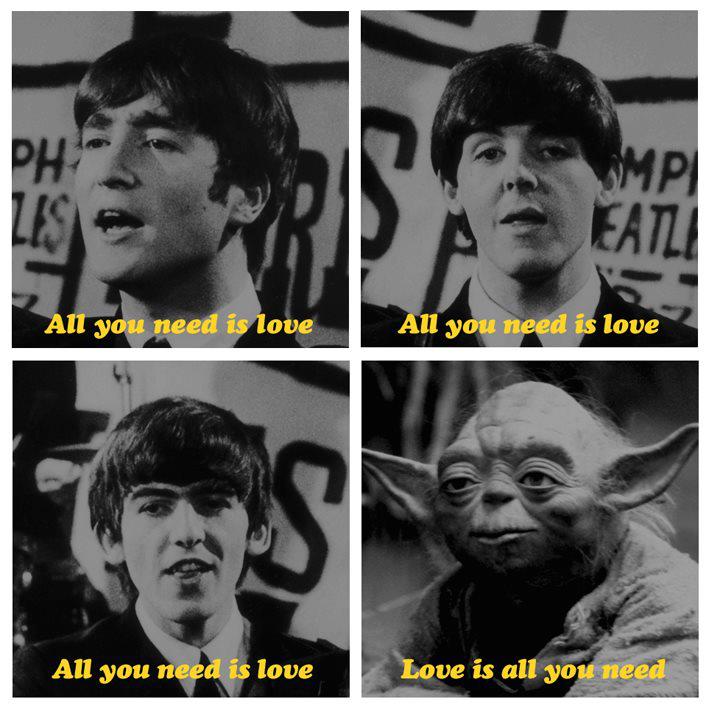
Love. As another John once sang, maybe that is all you need.
Me standing in front of the “Bean” sculpture in Chicago’s Millennium Park
Two and a half years ago I packed up my room at Grace House (the CSJP community house in Seattle where I lived with two other Sisters) and moved to Chicago to study at Catholic Theological Union. While it was hard to move to a city without any other CSJP Sisters, I was excited about the opportunity to study theology full time. I was also excited that my big sister Monica lived in Chicago with her family, and that I had a ready made group of “young nun” friends in town.
About a year later my Dad moved to Chicago as well, so I’ve had the unexpected opportunity to see him every week since then. I will miss those regular father/daughter bonding moments, as well as the regular kid time with my 4 1/2 year old nephew and the opportunity to get to know my sister better as an adult (we’ve never really lived in the same city before).
I’ve also made some great friends at school, mostly younger than me, who have made this time special. I know we will stay in touch thanks to the wonders of social media, and I’ve offered guest rooms for any who find themselves in the New Jersey/New York City area, but it’s never the same after you say that initial goodbye.
Of course, new adventures await! I am in the final stages of sorting, purging, and packing. Tuesday morning my friend and housemate Sarah will drive me and my many bags to the airport. When I get to New Jersey, I will be met by one of the Sisters with whom I will have the pleasure of serving on community leadership for the next six years. I’m actually moving back into a familiar space. Believe it or not, the house that was my novitiate house is now where I will be living with two other members of the leadership team. God has a funny sense of humor in my experience.
God is also faithful. I find myself praying with these words from our CSJP Constitutions during this time of transition:
“Confident of God’s faithful love and collaborating with others who work for justice and peace, we face the future with gratitude and hope.”
Global Faith Leaders Signed Declaration Against Trafficking in December 2014
Today (January 1) is the World Day of Peace. Each year the Pope issues a special message for this day. This year’s message is titled “No Longer Slaves, but Brothers and Sisters” and centers on the theme of human trafficking. I suggest reading, and praying with, his entire message, but here is a summary of what I see as the most important points.
Pope Francis directly applies the church’s understanding of the human person to the problem of human trafficking. He asserts that because human persons are “by nature relational beings … it is fundamental for our human development that our dignity, freedom, and autonomy be acknowledged and respected” (no. 1). This relational reality of the human person is denied through the “negative reality of sin” (no. 2). The original “sin of estrangement from God … and from the brother [and sister] … gives rise to a culture of enslavement” (no. 2).
This culture of enslavement exists today, with millions of people held in slavery-like conditions, despite the adoption of laws, agreements, and strategies “aimed at ending slavery in all its forms” (no. 3). Pope Francis believes that the contemporary reality of human trafficking “is rooted in a notion of the human person which allows him or her to be treated as an object” (no. 4). “Alongside this deeper cause—the rejection of another person’s humanity,” Pope Francis also identifies other root causes of the problem of human trafficking, including poverty, underdevelopment, corruption, armed conflicts, violence, criminal activity, and terrorism (no. 4).
Finally, Pope Francis believes it is necessary “to recognize that we are facing a global phenomenon which exceeds the competence of any one community or country” (no. 6). Therefore, he calls for a mass mobilization against human trafficking “comparable in size to that of the phenomenon itself” (no. 6).
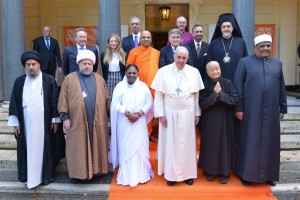
If you’d like to become part of the global movement to end human trafficking, you can take the same pledge that 11 leaders of the world’s major religions (including Pope Francis) signed in December at the Vatican.
Human trafficking is not inevitable – we can resist.
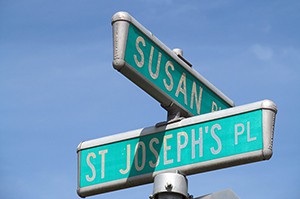

 At the Corner of Susan and St. Joseph