Sister Marie Paula – In Memory

OLYMPUS DIGITAL CAMERA
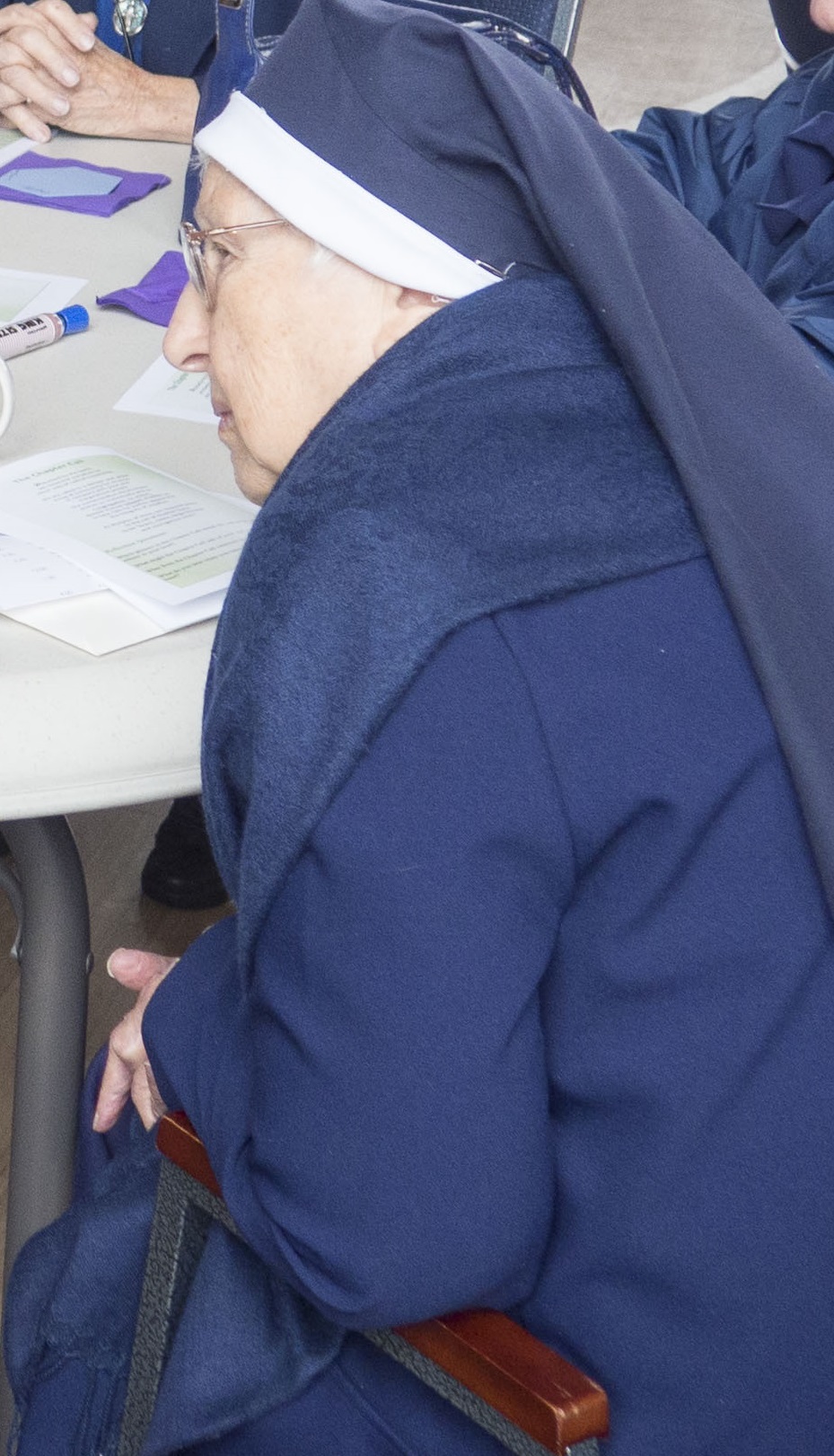
Sister Marie Paula listening

Sister Marie Paula went home to her loving God yesterday, just a little more than a month shy of reaching 98 years of age. She was one of the first CSJP Sisters I met in the east on a visit I made to check out the lay of the land before I entered the novitiate.

I will never forget her delight at meeting one of the “postulants from the west.” I can still picture that first encounter in my mind’s eye. It was in the chapel of Villa Marie Claire, where she was living and which is now used as a hospice. She told me that she had been praying for me. This is not an unusual statement, given the context, but then she pulled a picture out of her pocket. It was a picture of me with the other candidates who were set to enter the novitiate. She was carrying us in her pocket as she prayed for us, literally holding us in prayer.

A few weeks ago I had a good visit with her in her room in the infirmary. She was now on hospice herself  at the end of a life of prayer and loving service. I told her this story, and that I felt like she had literally prayed me into the congregation. I then told her that when she got to the other side, she had a lot of work to do praying for the new sisters who have not yet come. They needed her prayers too. She got very animated and talked about the joy of a life lived in community serving the Lord. She was alive right up until the end with the love of God and love for our CSJP community.

I love this picture of Sister Marie Paula. It was taken in March at our community assembly which was focused on future oriented conversations about mission.  There she is, leaning in, actively listening. For me it is a perfect portrait of an amazing, authentic, and animated woman of peace.

We will say goodbye to Sister Marie Paula this week. We will celebrate her life and remember the gift she was to our community, church, and world.  I have no doubt that she will be leaning in from her new home, listening to all that is going on, and praying fervently for our community, our  mission of peace, and the sisters yet to to come.

Praying with punk rock and popes

  Music often pops into my prayer sometimes to surprising effect. This morning I found myself praying with a song by Built to Spill, an indie band of my college years, not really punk rock but certainly punk influenced. The song is Center of the Universe and the lyrics go like this:

“I don’t like this air, but that doesn’t mean I’ll stop breathing it. Who doesn’t think they’re the center of the universe.”

I remembered I had made a prayer video to this song a few years back when I was in a similar spot of needing perspective beyond the immediate, a reminder of God’s faithfulness. In the video I quoted Gustavo Guttierez: “Hope does not come in a parachute, it has to be created.”

I am not the center of the universe, and neither are those around me. As Pope Francis so simply states in his new encyclical Laudato Si, “We are not God.” (par. 67)

But, as Pope Francis continues in paragraph 77: “God’s love is the fundamental moving force in all creating things. ‘For you love all things that exist, and detest none of the things that you have made; for you would not have made anything if you had hated it” (Wis 11:24). Every creature is thus the object of the Father’s tenderness who gives it is place in the world.”

We are not God. I am not the center of the universe. But I and we have been created by love, for love, in love. We are called to be co-creators of hope, breathing in the good and the bad transforming it by our very existence and presence and creativity and love.

Worry

I don’t know about you, but sometimes I cannot help but worry. I might worry about a particular situation. I might worry about people I love. I also find myself worrying on a grander scale, such as about the state of our collective hearts and the manifestations of our woundedness that we seem to inflict upon one another writ large (a la the shooting in South Carolina and the abysmal state of racial justice in our society). Ok, so some amounts of worry is warranted.

But yet, I find myself returning again and again to these words Jesus said on a mountain all those thousands of years ago:

“Can any of you by worrying add a single moment to your life-span? Why are you anxious about clothes?  Learn from the way the wild flowers grow. They do not work or spin. But I tell you that not even Solomon in all his splendor was clothed like one of them. If God so clothes the grass of the field, which grows today and is thrown into the oven tomorrow, will he not much more provide for you, O you of little faith? So do not worry and say, ‘What are we to eat?’ or ‘What are we to drink?’ or ‘What are we to wear?’ All these things the pagans seek. Your heavenly Father knows that you need them all. But seek first the Kingdom of God and his righteousness, and all these things will be given you besides. Do not worry about tomorrow; tomorrow will take care of itself. Sufficient for a day is its own evil.”

As it happens, this is the liturgical reading for today. It always stops me in my tracks and slows down the pace of my worrying. It gives me perspective.

And it helps me to realize that the path forward is not worrying about all the little nitty gritty details ad nauseum (which in my case I know can lead to a never ending worry loop), but in seeking to build the reign of God and seeking God’s peace through justice–in essence, seeking to live with the heart of God today and every day.

That, my friends, is the path to life, and when we step onto that path, Jesus tells us, tomorrow will indeed take care of itself.

IMG_0014

Peace is the word

peacescrabblePromoting peace has been central to the mission of my religious congregation, the Sisters of St. Joseph of Peace from our very beginnings. Our original 1884 Constitutions tell us that we were founded “to promote the peace of the Church both by word and work. The very name Sisters of Peace will, it is hoped, inspire the desire of peace and a love for it.”

Promoting peace is also central to the mission of the Church. This has been true from the very beginnings of the Christian community. This morning as I was praying with the Scriptures in my morning prayer book, I ran across this quote from a homily by St. John Chrysostom (ca. 347-407), one of the early Church fathers and a Doctor of the Church:

So as far as a human being can, you must do what Christ the Son of God did, and become a promoter of peace both for yourself and for your neighbor. Christ calls the peacemaker a child of God. The only good deed he mentions as essential at the time of sacrifice is reconciliation with one’s brother or sister. This shows that of all the virtues the most important is love.

Sometimes, when I tell people that I am a Sister of St. Joseph of Peace, they ask if we are a new community. In conversation with these folks, this seems to be because we have a notion that concern for peace is something new.  Hence, a community founded to promote peace must have been formed recently. And yet, as these words from an early Christian leader tell us, and truly as the example and peaceful witness of Jesus constantly remind us, peace is central to our mission as Christians.

This morning as I was praying with this reflection and the Scriptures, I found myself remembering a song from my childhood – Grease from the movie of the same title with John Travolta and Olivia Newton John.  My sister Monica and I used to spend hours in our bedroom, hairbrush in hand, singing the lyrics along with our vinyl recording of the sound track (the G-rated version of course!).  In prayer today, I playfully changed the words of the song, simply replacing the word “grease” with the word “peace.”

They think our love is just a growing pain
Why don’t they understand, it’s just a crying shame
Their lips are lying, only real is real
We stop the fight right now, we got to be what we feel
Peace is the word
It’s got a groove, it’s got a meaning
Peace is the time, is the place, is the motion
Peace is the way we are feeling
Peace is the word my friends.  We are the motion. Go … be peace today!

Summer Camp Revisited

lawcampWhen I was in middle school and high school, my mother encouraged me to apply to attend summer programs for kids like me, or, as I liked to call it, summer camp for nerds.  Generally held on college campuses, these were residential weeks on a college campus with other kids with similar interests.

These talented and gifted summer programs were organized by the State of Maryland Department of Education, and apparently they still happen.  One year I attend history camp in at St. Mary’s University in Southern, Maryland, where we participated in an archaeological dig.  The next year I attended a creative writing camp at Washington College on the Eastern Shore. And another year I attended a public service camp at the University of Maryland.

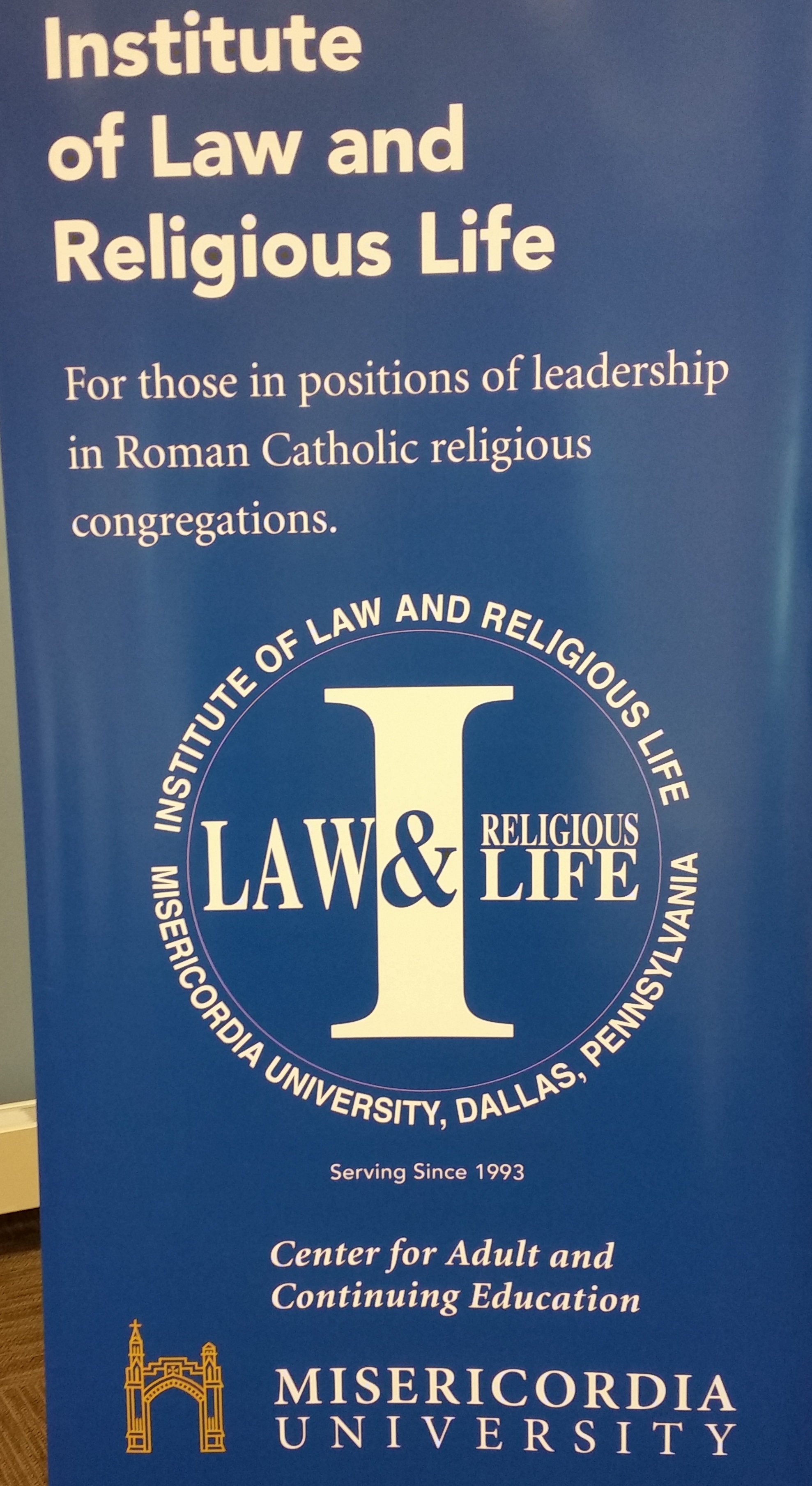
Flash forward 30 some years. I am back on a college campus this week with folks with similar interests, learning about interesting and important things.  Only this time, I’m here with a bunch of other elected leaders of religious congregations learning about aspects of civil and canon law which are particularly relevant to our ministry of leadership.

Officially, it’s the Institute of Law and Religious Life, but some of us have taken to calling it “Law Camp.”  And that makes my inner nerd very happy.

Margaret Anna Fridays – Founder’s Day Edition

Mother Francis Clare (Margaret Anna Cusack)

Today is one of our CSJP Community Feast Days – Founders Day. On this day in 1899 our founder, Margaret Anna Cuasck (known in religion as Mother Francis Clare) went home to God.  Periodically on Fridays I share some words of wisdom from her here on the blog.  She was a prolific writer in her day, writing lives of the saints, spiritual works, histories, and social reform.  Under the inspiration of the Spirit, she also founded our Congregation, the Sisters of St. Joseph of Peace, to promote peace in family life, in the church, and in society.

On this Founders Day, I share an excerpt from The Nun of Kenmare, her autobiography, in which she recounts her audience with Pope Leo XIII on the founding of the new order, St. Joseph’s Sisters of Peace:

My audience [with Pope Leo XIII] was entirely private, as I did not require an interpreter. Mgr. Macchi brought in the whole set of my books to his holiness, who looked at them, I think somewhat surprised at the number. Some of them were duplicated, having been translated into German, French, and Italian. …

His holiness specially commended the plan of my new order, and encouraged me in every way to continue writing. He gave his blessing to all the sisters present and to come, and to all those who would contribute to my work. I cannot forget his paternal and affectionate kindness, and the sympathy he expressed for the troubles I had gone through. My last audience was a public one, and at this the Holy Father noticed me specially, and spoke to those who were standing around, explaining to them in a few words that we were Sisters of Peace, and the object of our work.
~M. F. Cusack, The Nun of Kenmare, 1889

If you’d like to learn more about Mother Fracnis Clare, here are a few places to start:

I spy

On my morning walk today, I spied with my little eye …

Two rabbits
One literally running down the bunny trail
Only his cotton tail visible.

One coast guard ship
Patrolling the waters of the
Hudson.

An empty Heineken can
(Presumably empty … I did not check)

A myriad of birds
Which also serenaded my ears
Along with the oddly soothing sounds of traffic.

And in the distance
The city
People busy about many things
Starting a day
Full of promise.

image

Global Sisters Report: Nuns and Nones

GlobalSistersReportMy latest contribution to the larger conversation has been posted on Global Sisters Report: Nuns and Nones.  It’s a snapshot of my musings on some of the recent reports and happenings in the world of religion, namely the Pew Report documenting the rise of the “nones” – the 56 million americans who claim no religious affiliation – and the interest in the future of nuns.

In a society where the numbers of nones are on the rise, the number of nuns is declining. I believe it is possible to view the dynamic forces behind both trends as part of the same rapidly changing landscape of religious life and shared socio-political context of increasing inequality, poverty, violence and environmental destruction. This trend and shifting landscape also apply to the wider church, especially given that the numer of U.S. Catholics is also declining according to the Pew research.

This raises a number of questions for me. First of all, the attention paid to Catholic Sisters, combined with the not insignificant efforts to help ensure our future, make me think that somehow it matters that we are present in the church and society. But are we merely symbolic figures, or is the way we engage the signs of the times and live the Gospel of some relevance and importance beyond ourselves? If so, how can we remain relevant and engaged in the larger questions of meaning and justice in the context of a society which increasingly eschews religion? If I do not want to be limited or defined by popular culture images or stereotypes of nuns, how does my life of ministry and prayer lived in community witness to the Gospel in a sea of growing inequality and indifference?

Read the whole column over at Global Sisters Report

Franz Jägerstätter – Courage to Resist Nonviolently

Today is the feast day of Franz Jägerstätter who was beatified by the Catholic Church in 2007. I learned a bit about his life, witness, and sacrifice for peace during my graduate studies as part of my research into nonviolent resistance. Here is an excerpt of a paper I wrote about nonviolent resistance to the Holocaust:

FranzAlthough one might consider his 2007 beatification to have shifted his “ordinary” status, Franz Jägerstätter lived a rather ordinary and simple life. His primary occupations were husband, father, and farmer.  His marriage to Franziska, a very devout Christian, was happy and deepened his own commitment to his Catholic faith. He was a volunteer parish sacristan and later became a lay tertiary Franciscan. Equipped with only a seventh-grade education, he was nevertheless widely read—periodicals, devotionals, papal encyclicals, lives of the saints, and scripture.

Jägerstätter had a vivid dream in 1938, two months prior to the arrival of Hitler’s army in his native Austria. It was a dream upon which he later reflected and acted.

“Suddenly, I saw a beautiful train, which was going around a mountain. Grown-ups and children were streaming toward it and could hardly be held back. I would rather not say how few adults did not get on the train. Then suddenly a voice said to me: ‘This train is going to Hell’ … And now I realize that it embodies National Socialism, as it descends upon us with all its many organizations.”

“From the very beginning,” notes his biographer Erna Putz, Jägerstätter “refused all cooperation” with the Nazi regime, even refusing government payments for raising children or crop damage.  He was the only person in his village to vote “No” to the April 1938 German annexation of Austria, even though the annexation vote had been endorsed by Austrian Cardinal Innitzer. Conscription soon became the fate of able bodied Austrian men, now German citizens.

Jägerstätter was no exception.  He received six months of army training in 1941, during which time he realized that he could not in good conscience serve in the Nazi military. As a devout Catholic, he discussed his decision with his priest, who told him in confession that such a decision would be akin to suicide, and even with his local Bishop, who advised him to think of his duty to his family. His resolve was unchanged. He wrote: “Does it still bear witness to Christian love of the neighbor if I commit an act, which I truly regard as evil and very unjust, and yet I continue to commit the act because otherwise I would suffer either physical or economic harm?”

When Jägerstätter was called to active duty in 1943, he declared his refusal to participate. He was beheaded on August 9, 1943. Faced with evil, and commanded to participate in that evil, he responded by seizing the moral initiative, refusing to submit, and being willing both to suffer rather than retaliate and to undergo the penalty of breaking an unjust law.