As a Bernardin Scholar at Catholic Theological Union (MA in Theology 2015) I have the honor of carrying the name of Cardinal Joseph Bernardin, perhaps most recognized for his articulation of the consistent ethic of life. Simply put, human dignity and the right to life extend from the beginning of life to natural death.
As I read the news this morning, especially this article detailing the deaths that will be caused by the US backing out of its commitments to share our abundant resources with those most in need of life saving assistance across the globe, I remembered these words from an address Cardinal Bernardin gave in 1984:
“It is clearly simply inadequate simply to say that human life is sacred and to explain why this is so. It is also necessary to examine and respond to the challenges to the unique dignity and sacredness of human life today. Human life has always been sacred, and there have always been threats to it. However, we live in a period of history when we have produced, sometimes with the best of intentions, a technology and a capacity to threaten and diminish human life which previous generations could not even imagine.”
I find it tragic, indeed sinful, that those with the power of my nation today who have the capacity to protect and save life are instead taking swift, rash, and devastating actions to withhold resources from those most in need for ideological purposes. Millions of people will literally die in the coming months and years, and in our globalized society we in this country will not be immune.
One child who becomes paralyzed because we let Polio vaccines expire in a warehouse is too much. 200,000 will be paralyzed without US assistance.
One child starving is unacceptable, and these cuts mean one million children will not receive life saving malnutrition treatment.
Some of the contracts that were ended by a terse email claiming these good works were no longer convenient for the US government included:
-TB treatment for one million people including 300,000 children
-The only source of water for 250,000 people in a refugee camp in Democratic Republic of the Congo
-Malaria tests, nets and treatments for 93 million people
-A grant to UNICEF’s polio immunization program, which paid for planning, logistics and delivery of vaccines to millions of children.
-HIV treatment 350,000 people in Lesotho, Tanzania and Eswatini, including 10,000 children and 10,000 pregnant women who were receiving care so that they would not transmit the virus to their babies at birth.
The list goes on and on and we, the American people whose “convenience” was named as the reason why, will be complicit in the deaths that will result if we do not speak up and call this what it is … sinful.
I for one will not and cannot be silent.
I will pray, especially this morning for the intercession of Cardinal Bernardin.
I will act by speaking out and advocating for what is right.
I will stay informed and raise consciousness so that we can all form our conscience.
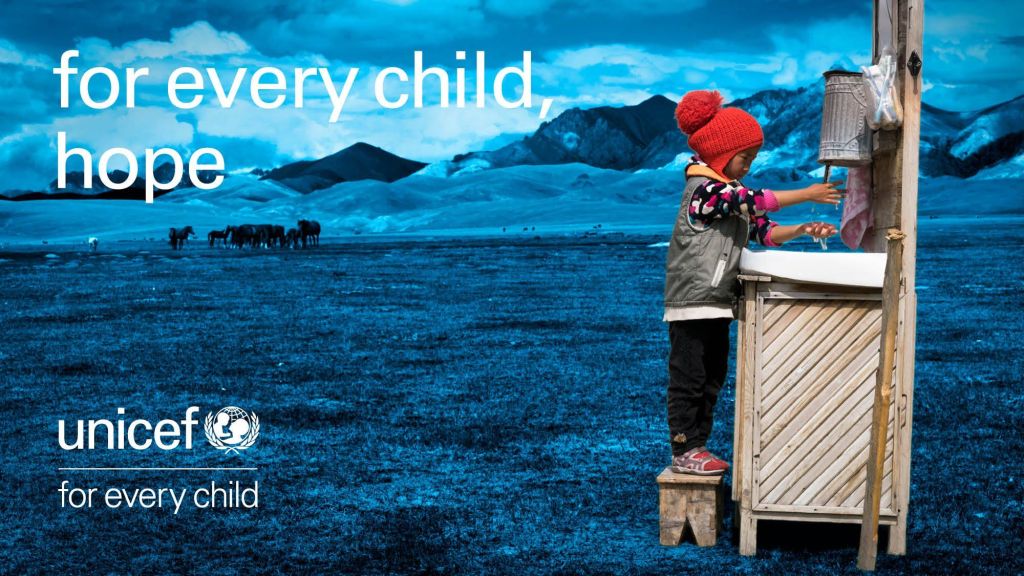
Yesterday, I was blessed to spend the day at the first ever UNICEF USA Interfaith Convening on the Rights of Children. (Tomorrow is World Children’s Day). UNICEF gathered a diverse group of interfaith partners to learn about and explore how to address the equity gap in meeting the “polycrises” impacting the world’s children.
In 2023 alone, UNICEF responded to more than 400 humanitarian crises, but just 5 received 50 percent of the funding, while others don’t make the headlines. For example, I have to admit I was not aware that over 2 million people are displaced in Burkina Faso because of armed conflict. I committed to coming home and researching this particular crisis.
The Convening was an important learning opportunity. More importantly, it was a time to connect across our faith traditions. What became more clear as each speaker shared was that we are all motivated by universal truths to meet universal needs. There is power and possibility as we come together to act for the children of our world. Change is possible when we build community.
Hope was palpable in the room as people from faith traditions that are, at this very moment, engaged in armed conflicts that are harming children, came together not to debate politics but to commit to serving our common humanity. Differences arose, but we did not get stuck there. We all agreed that we need to cultivate more spaces like this to spend time on common ground. Rooted in our own traditions, we came together to plant seeds of hope.
During my sharing time, in the format of a fireside chat (minus the fireside!), I was asked what I think is the greatest crisis facing children. Reflecting on the millions of children at risk every day from dangerous conditions resulting from armed conflict and environmental disasters, I shared what Pope Francis says about the globalization of indifference. How can we be indifferent to the need of EVERY Child for safety, food, shelter, health, and education? And yet as a global community we are failing so many children.
We must resist the temptation to feel numb. We need community, we need to cultivate our common ground, and we need to act. For every child.
Because of the equity crisis, there is a desperate need for flexible funding. I was there because my Congregation supports the UNICEF Every Child Fund, a fund that enables UNICEF to help reach children with critical support when and where they need it the most. YOU can too! Click the link to learn more. And if you feel so called, to make a donation no matter how small.
Cardinal Joseph Bernardin passed away on this day in 1996. I never knew him personally but he is a spiritual mentor and I am honored to carry his name as a former Bernardin Scholar at Catholoc Theological Union. He has much to teach (and challenge) us in our current times of polarization, not just in our national climate but also our church.
Literally weeks before his death, he launched the Catholic Common Ground Initiative (now housed at CTU) with these words:
Are the differencesamong U.S. Catholics generating reflection, exchange, debate, ideas, initiative, decisiveness? Or are they producing distrust, polemics, weariness, withdrawal, inertia, deadlock?
No one can answer these questions definitively. But I and many others representing a range of theological outlooks feel that, in far too many cases, the brave new sparks and steady flame of vitality in the Church are being smothered by the camps and distractions of our quarrels.
… [T]he Catholic Common Ground Project offers the promise of our rising above hardened party lines and finding renewal in the splendor of truth revealed in the person of Jesus who is our Lord and our savior.
And so, in that spirit I hand on to you the gift that was given to me– a vision of the Church that trusts in the power of the Spirit so much that it can risk authentic dialogue. I hand that gift on to you without fear or trepidation. I say this because I know that it is a gift you already prize and cherish. I ask you, without waiting and on your own, to strengthen the common ground, to examine our situation with fresh eyes, open minds, and changed hearts, and to confront our challenges with honesty and imagination. Guided by the Holy Spirit, together, we can more effectively respond to the challenges of our times as we carry forward the mission that the Lord Jesus gave to us, his disciples. It is to promote that mission that the constructive dialogue we seek is so important.
I have been pondering what, if anything, to share regarding my post election thoughts. It hasn’t quite been a week, but I have been reading the national temperature and preparing for this result for a while now. So here goes…
First, before you ask, I have already discerned that this time around, I will not be reviving my daily practice of posting a prayer for President Trump.
Why?
For one thing, the platform itself has changed from Twitter to X, resulting in a significant change in ownership, philosophy, and audience. Somehow (the grace of God?), for the most part, I avoided being trolled or harassed last time. I suspect that may not be true this time around, and dealing with that possibility is not where I wish to place my energy.
This does not mean I stop praying. I pray for our elected leaders each and every day, and the 47th President and his administration will certainly be included in my daily prayers. As will the most vulnerable people and ecosystems who will be impacted by policy changes he proposes.
I have been posting short videos that share some simple messages about God’s love, goodness, the beauty of God’s creation, human dignity, the call to be still and grounded…
These are simple yet profound truths that seem to be lost or drowned out in the noise of the globalization of indifference and toxic nature of our (un)civil discourse that makes fertile ground for misinformation and the sowing of fear, hate and division. These posts seem to be finding an audience, if modest in size. More importantly, I believe this type of messaging is urgently needed in our public space. Let me explain.
When I was in graduate theological studies, my research focused on resistance to social sin. One of my key findings had to do with identity and moral choice.
Political psychologist Kristen Renwick Monroe analyzed first hand accounts of ordinary Germans during the Nazi regime and found that how they saw themselves directly impacted how they responded. I believe there are lessons to be learned for our present moment.
Those who supported the regime saw themselves as victims. They were willing to act preemptively against the other out of a desire for self-preservation.
Bystanders saw themselves as helpless, just one person alone against the Nazis. What could they do?
Rescuers saw themselves as connected with everyone and able to effect change. Notably, Monroe also discovered that they were the only group who “had integrated the value of human life into their worldview.”
She concludes that “identity constrains choice” across all three groups. In other words, one’s identity—in relation to self, other, world, and agency—radically influences one’s ethical response and actions. Monroe believes that her findings suggest that identity constitutes “the force that moves us beyond generalized feelings of sympathy, sorrow, or even outrage to a sense of moral imperative.”
So, in addition to getting ready to be a strong, vocal, and persistent advocate for the common good, human rights, peace, and the integrity of creation in the face of likely policy, legislative, and economic changes over the next four years, I also want to do my part to help (re)form our collective sense of identity and expand our menu of moral choice.
I see myself as connected to everyone. My worldview, informed and inspired by my parents and their/my Catholic faith, calls me to see human life and dignity and the goodness of all of God’s creation as central to my worldview and demanding of my action. My religious community strengthens and expands this understanding through our common life, prayer, mission, and charism.
I feel a deep sense of call to use my gifts, talents, and influence to spread that message in the belief that it will make a difference. Also, I am hoping it will help me stay grounded during the next four years.
Four years ago it was my honor and privilege to be a Nun on the Bus. You remember that election I am sure. I was on the bus from Janesville, Wisconsin to Cleveland, Ohio. Along the way I met some amazing people and heard incredible stories about the joys and struggles of our brothers and sisters. My leg on the trip ended at the Republican National Convention where we passed out lemonade to delegates and asked them three questions: 1. Who is difficult to talk to about politics in your family and why. 2. What conerns you about the election. 3. What gives you hope for our nation.
“Our diversity is our strength,” one man from Wisconsin told me. “It can be scary, but over time our country will heal based on our strong values.” Another from Tennessee said, “We have overcome a lot before as a nation and can do it again.”
For that to be possible, we need to bridge the growing political divide. We need to sweeten the sour conversations in our body politic, in our families and in our communities. We need to talk with people with whom we do not normally engage. If we want to mend the gaps and reweave the fabric of society, then we need to move beyond trading barbs, attacks and presumed facts and focus instead on our hearts, probe our fears, and dare to hope for our nation.
(you can read other reflections I wrote from the bus in 2016 here, here, here, and here.
Sadly, the divide has deepened and the gaps seem even wider today. I believe that this 2020 election comes at a critical time in our nation’s story. The theme of the 2020 Nuns on the Bus Tour–which will of course be virtual given our COVID reality–is therefore quite fitting: Who We Elect Matters. For this reason, I decided to get back on the bus this year to talk about how I feel called to be a multi issue voter.
In many ways, the voter I am today is because of my Mom. My Mom knew in her bones that who we elect matters in the lives of real people, especially those who are poor and vulnerable. She taught me to care for life at all stages, to promote human dignity and the common good and to bring all those concerns into the voting booth (or onto the pages of a mail in ballot, as the case may be.)
Now, you might be wondering what a virtual Nuns on the Bus Tour looks like! Well, the journey officially begins on September 23, but the website is live now. When you click on the link you will find a map of our great country, with various stops you can make, including:
-Meet a Nun on the Bus Videos (you can watch my video here) and Site Visit videos where you can meet people involved in social service agencies and community organizations
-Sign up for live events, including Site Visits, Town Halls for Spirit Filled Voters and Dialogues Across Geographic Divides.
I will be attending events in New York City, New Jersey, Florida, Kansas, St. Louis, and Arizona — all virtually of course. I hope to maybe see some of you there!
But most importantly, I pray that all voters will take this election seriously, follow their conscience, and vote for the common good.
In today’s reading from Paul’s Letter to Timothy, we hear
For God did not give us a spirit of cowardice but rather of power and love and self-control. So do not be ashamed of your testimony to our Lord, nor of me, a prisoner for his sake; but bear your share of hardship for the Gospel with the strength that comes from God.
I think we all need to pray with and reflect on these words, especially as we enter into a time like none we have experienced in our lifetimes, when the widow, the orphan, the refugee, the marginalized and vulnerable are under attack by misguided, isolationist and dare I say non-Christian policies.
But God did not give us a spirit of cowardice. God gave us the Holy Spirit to disturb us, urge us on, and give us the energy and inspiration to stand up for what is good and right and just.
We were called to these times to bring the Gospel values of love, justice, peace, inclusion, equality, and compassion to our lives together. We are called to work with the Spirit on behalf of the common good.
The church, which means both leaders and the people of God, needs to be a strong voice for Gospel values during these dark days.
For my part, I have decided to tweet to the president each day of his administration, since it is a platform he follows religiously as it were. But more important than whether or not he actually reads any of my tweets, I am committed. I am praying for him each day. I am praying for those who are impacted by his unjust policy choices. And I am speaking out. Resistance must be centered in the goal of right relationship, and at this point when I want to just hide under the covers, I am called to stay at the table and engaged, to keep my eyes open, and to act with a compassionate heart and a loud voice for justice. As someone who follows Jesus, it is the least I can do, and hopefully this commitment will lead me to courageous action on behalf of the common good.





 At the Corner of Susan and St. Joseph