
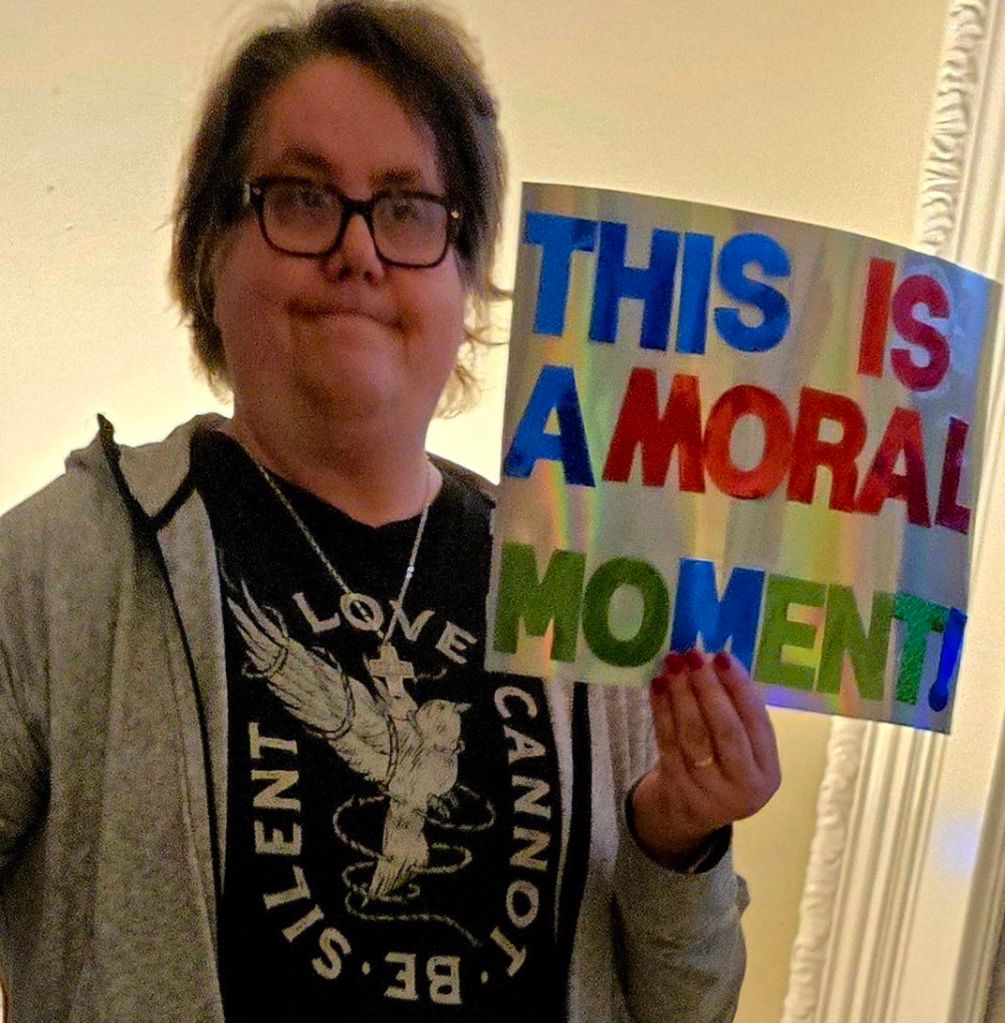
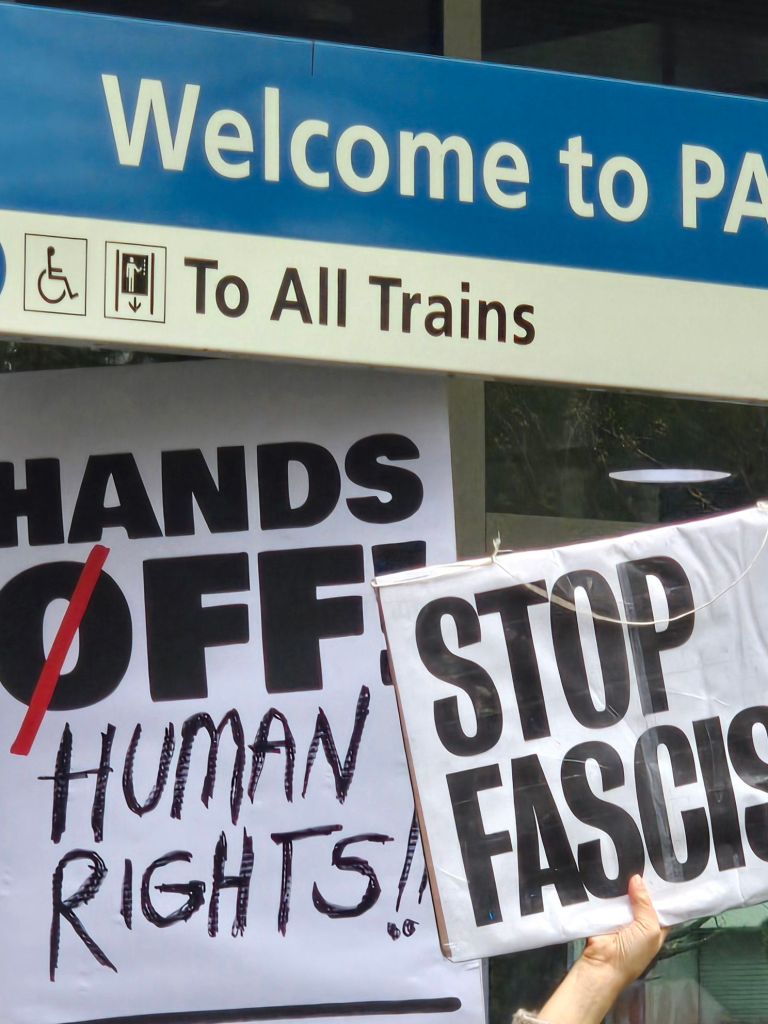
I started my day with a community of strangers outside a downtown subway station in Jersey City this morning, standing up and speaking out for our democracy, the common good, and human rights (among other things). This was one of over 1,300 events organized for today across the country under the unifying theme of #HandsOff. I carried my homemade sign which said on one side, “This is a moral moment” (quoting my Senator Cory Booker), and “Time 4 Good Trouble” (quoting John Lewis) onthe other. Under my raincoat I wore my “Love cannot be silent” t-shirt. (Before I left the house I prayed with St. Joseph and showed him my signs, because, well, I am me!)

Some reflections …
- People of all ages showed up, even with the forecasted rainy weather. From families with toddlers in tow and even a mom-to-be with a very visible baby bump to grandparents and retirees and every generation in between. They even stayed when it rained, although thankfully the organizers had premptively shifted to a location that provided some shelter. Good organizing is appreciated and important and Knitty Gritty JC, a new to me local organization, did a great job planning this event.
- For the most part these were not your standard protest goers (although some of us were there to be sure) but ordinary folks who answered the call to do something! They quickly went from standing around awkwardly to learning and loudly joining the chants, from the oldie but goodies (Tell me what democracy looks like, this is what democracy looks like) to hot off the news cycle ones (Ho ho, hey hey, Donald Trump crashed your 401k). Moreover, they held their signs high and joined in boisterously. I particularly loved seeing the toddlers dancing to the chants.
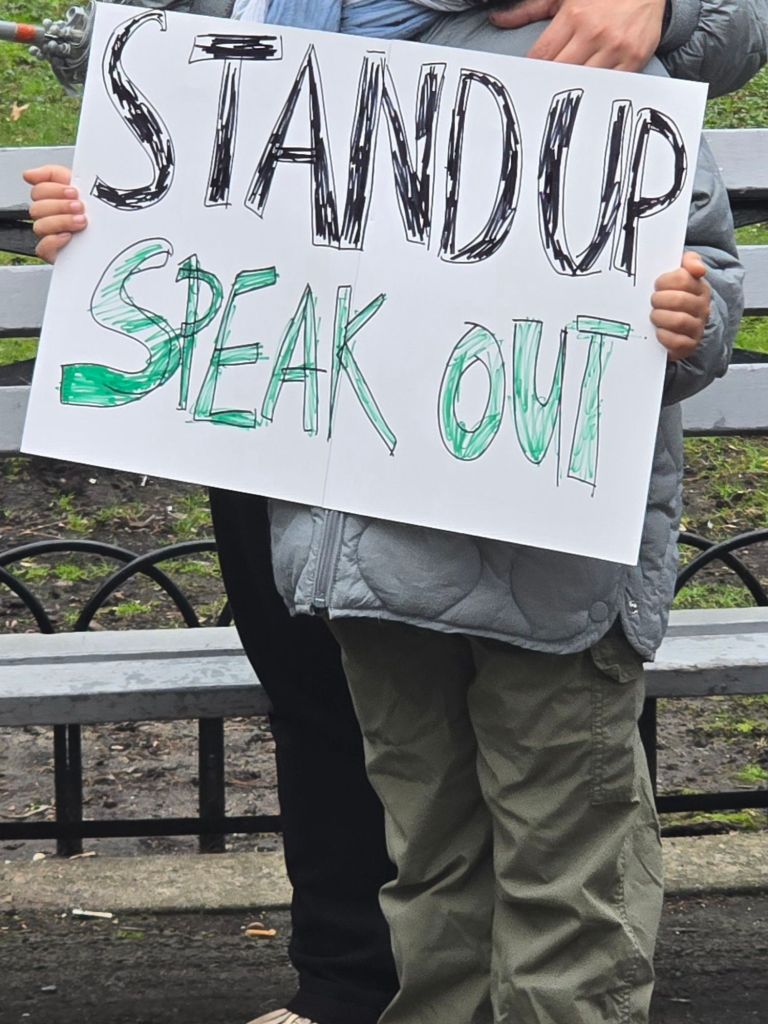
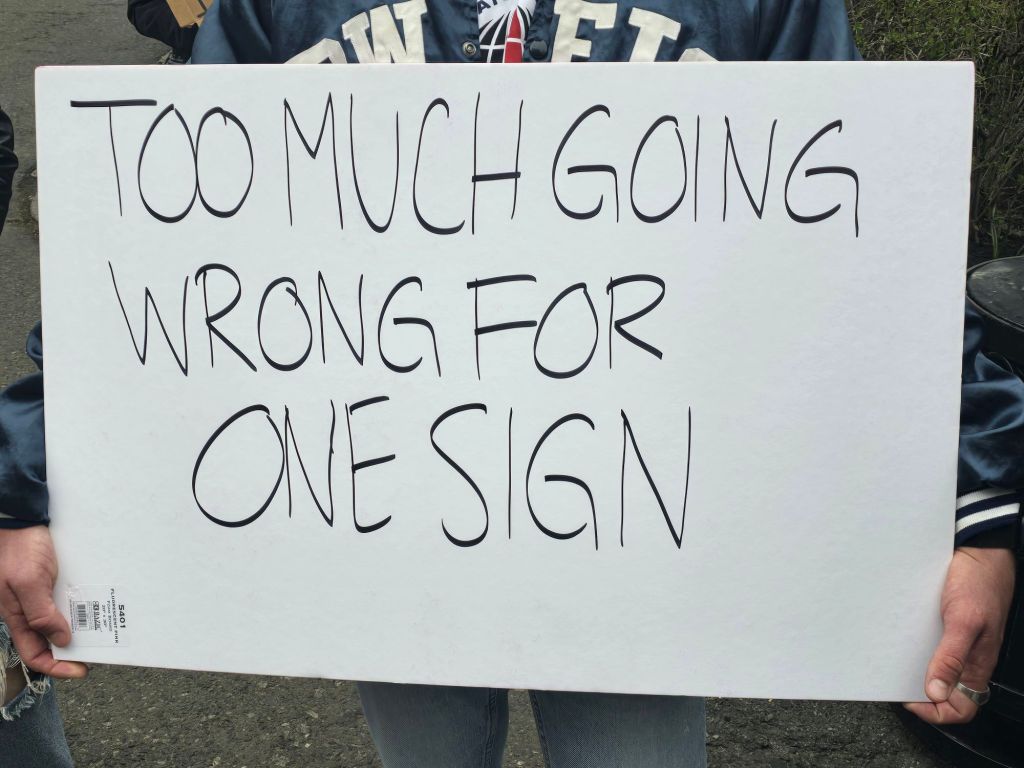
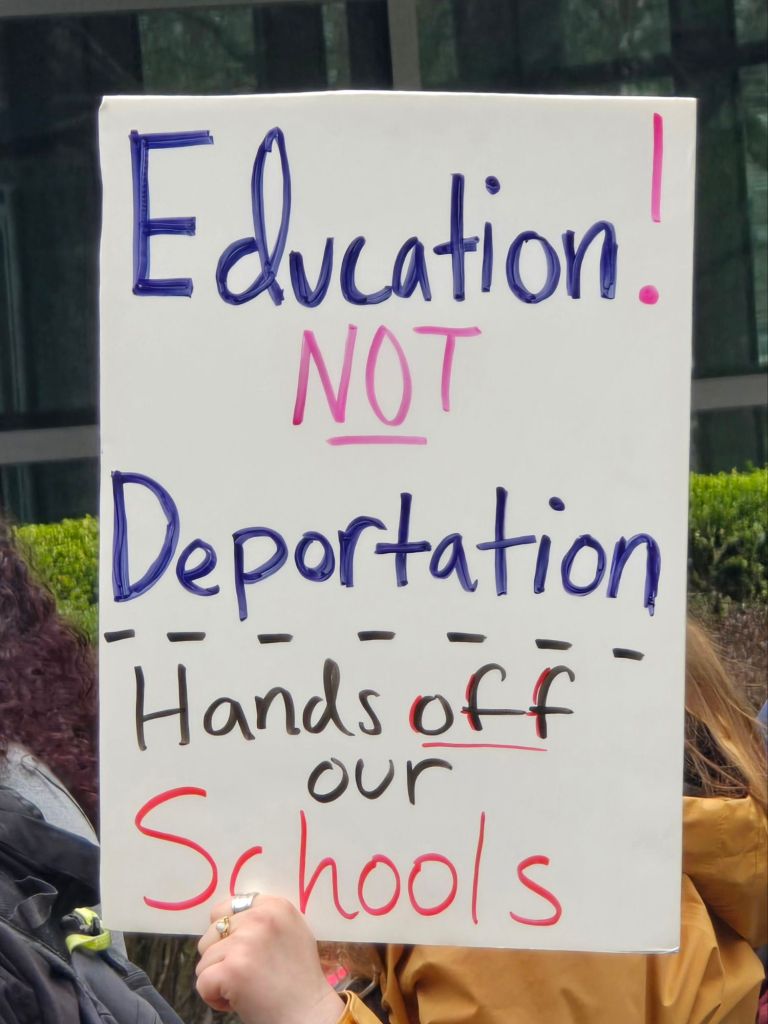
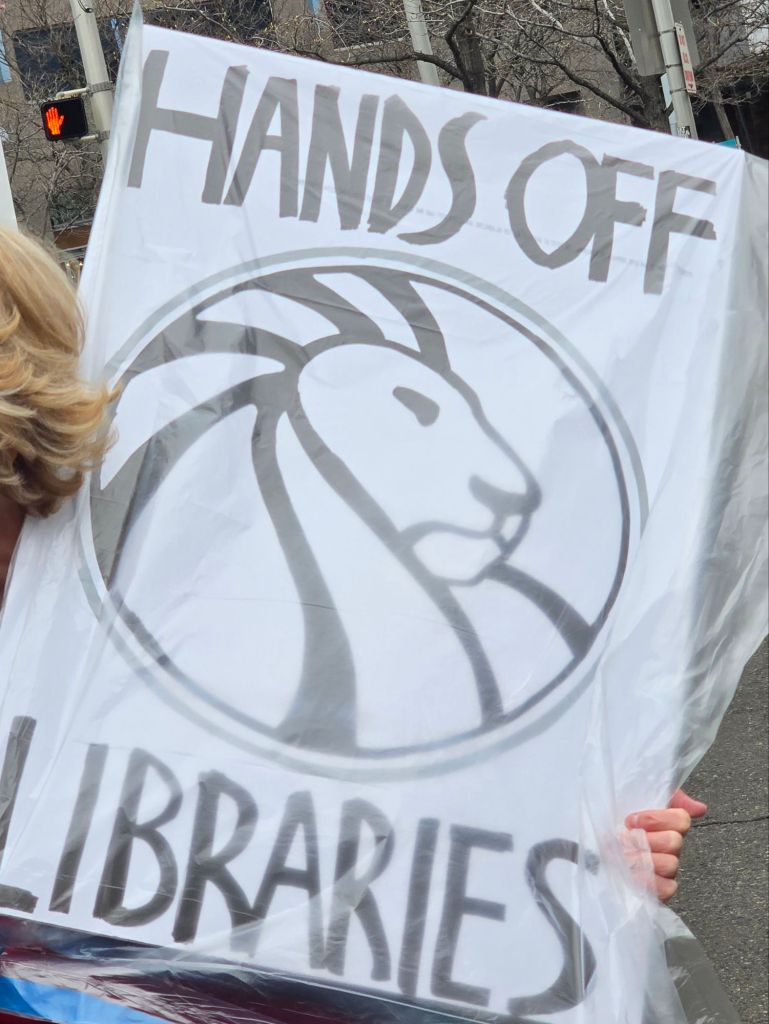
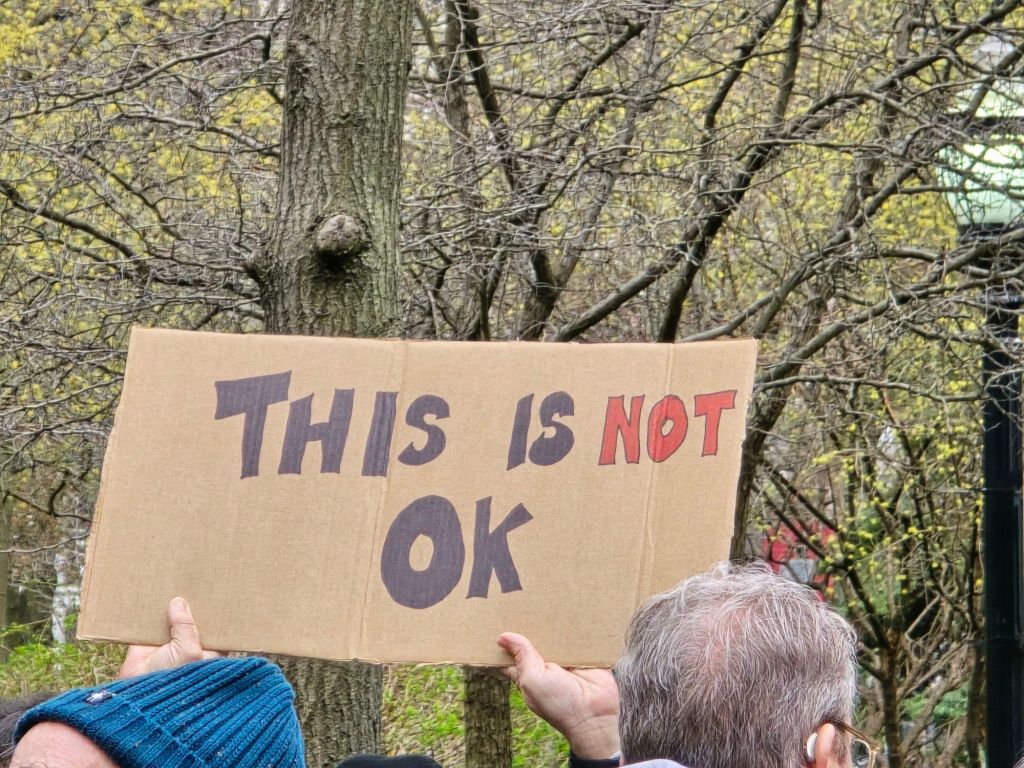
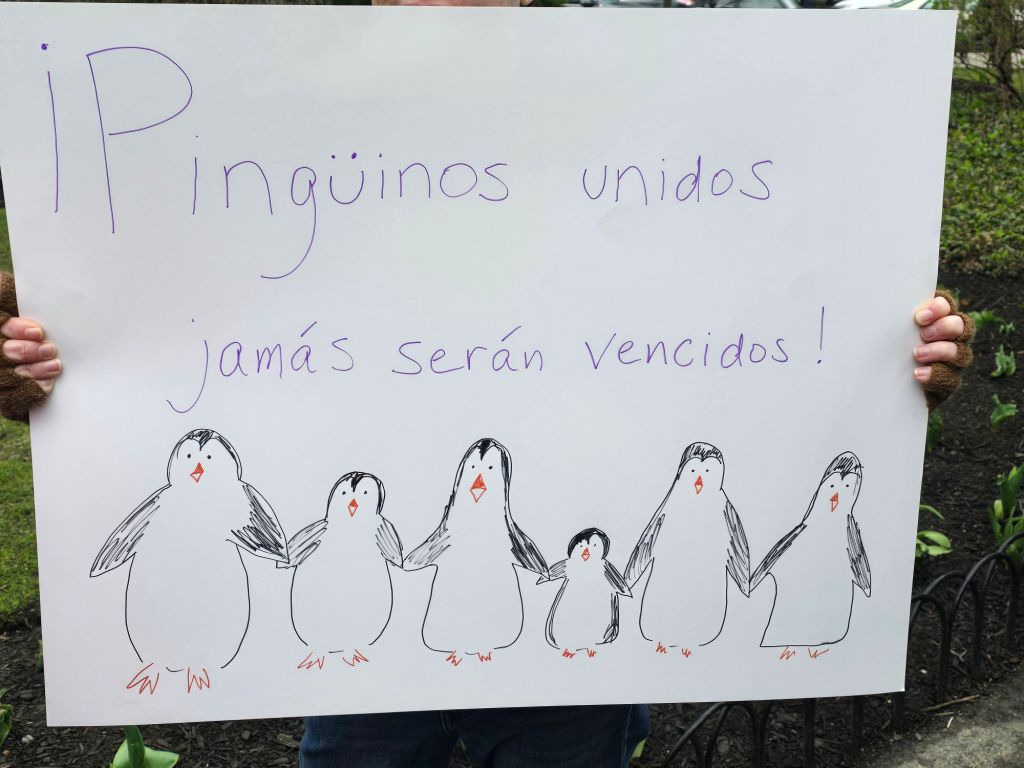
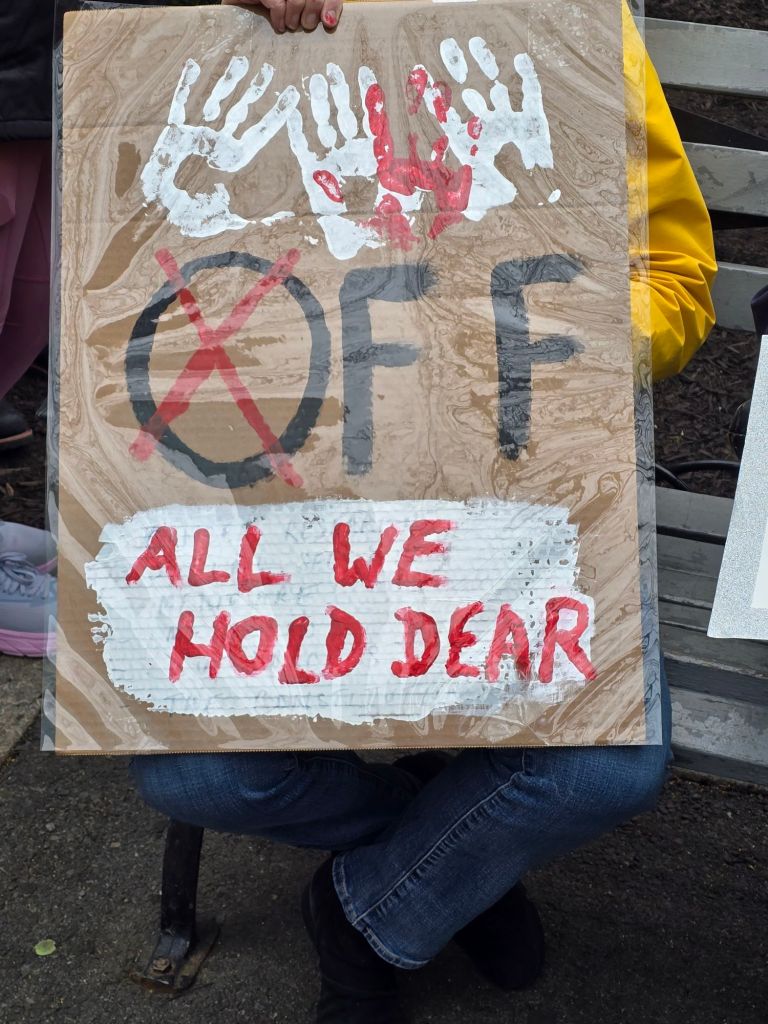
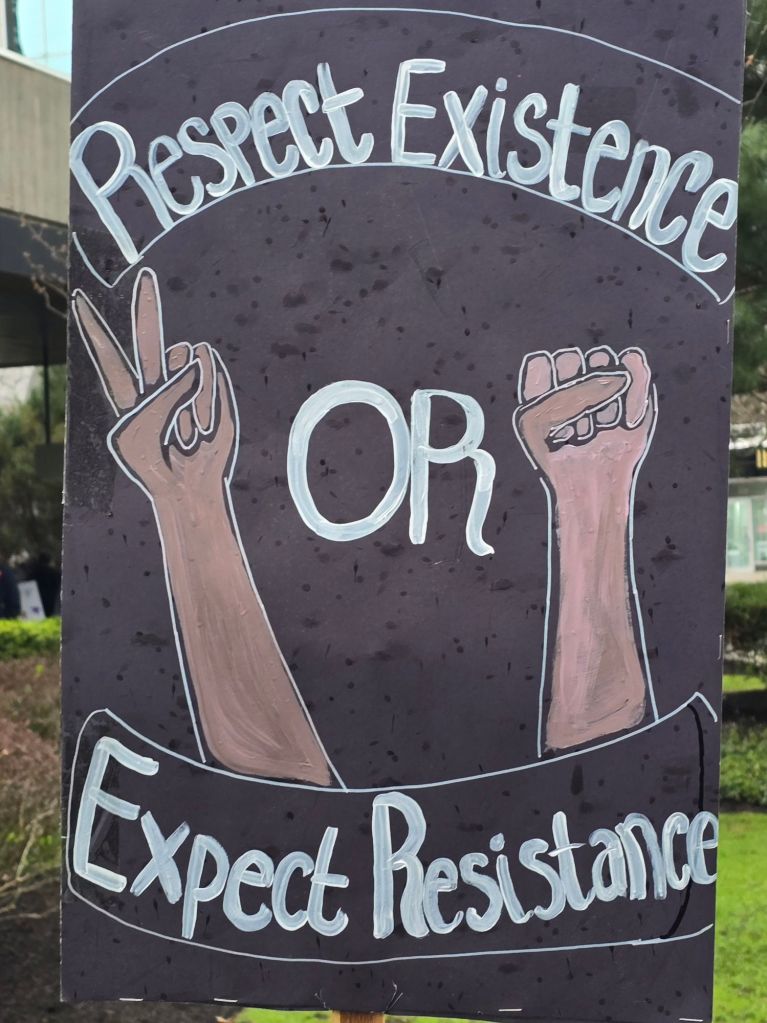
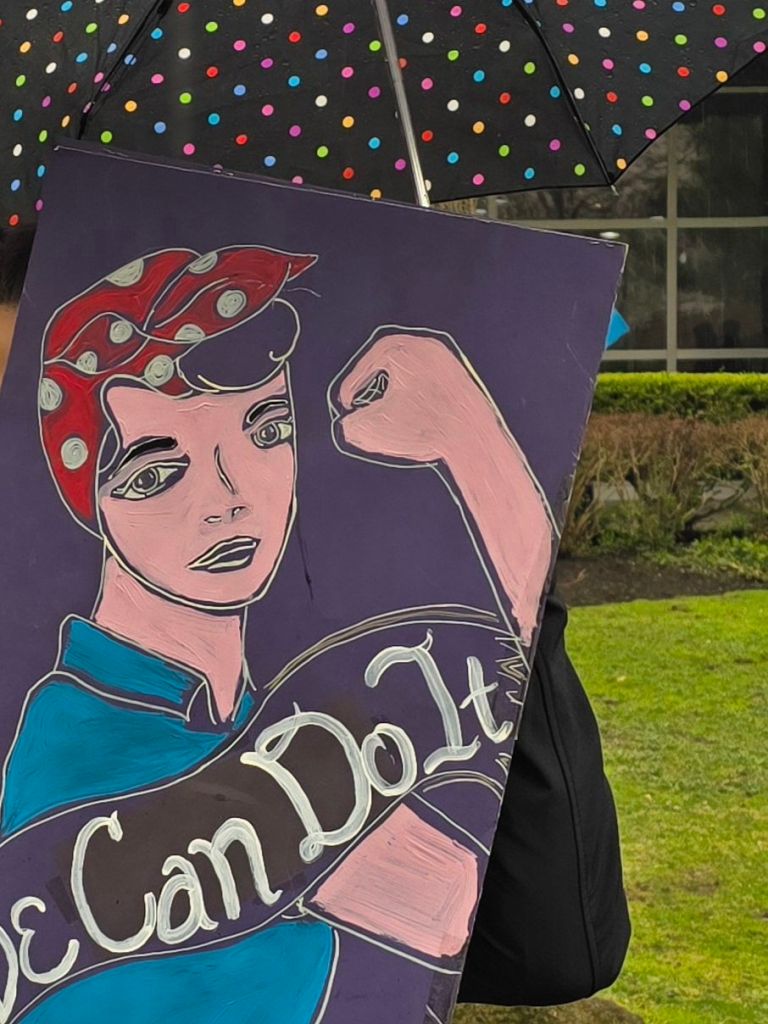
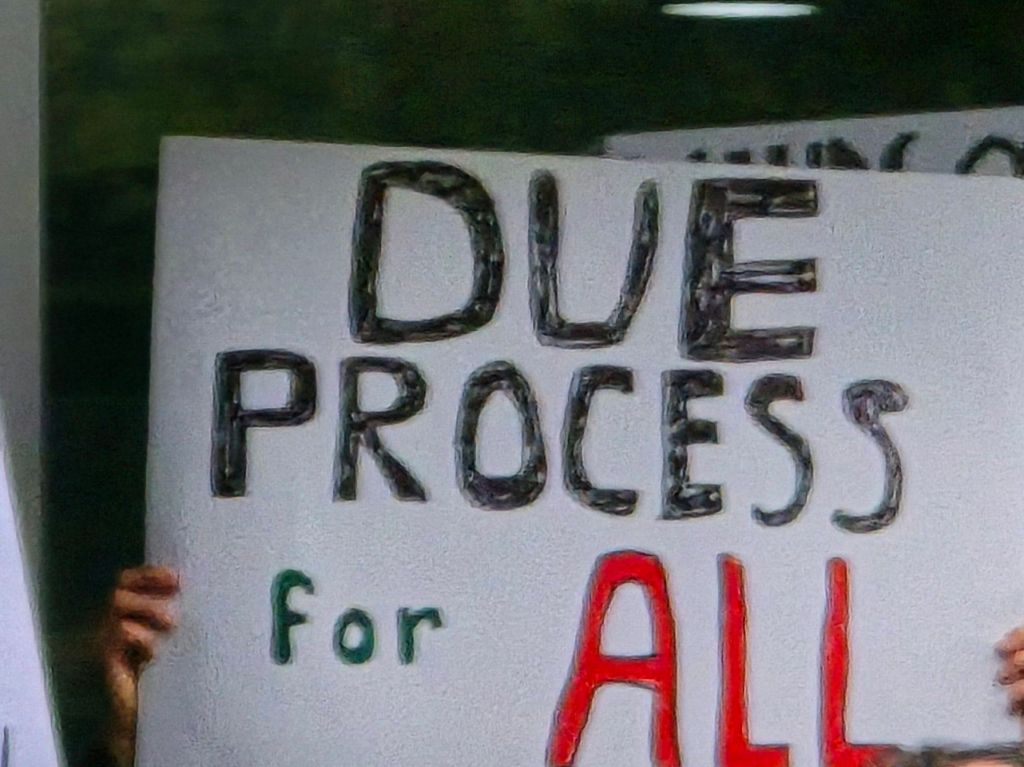
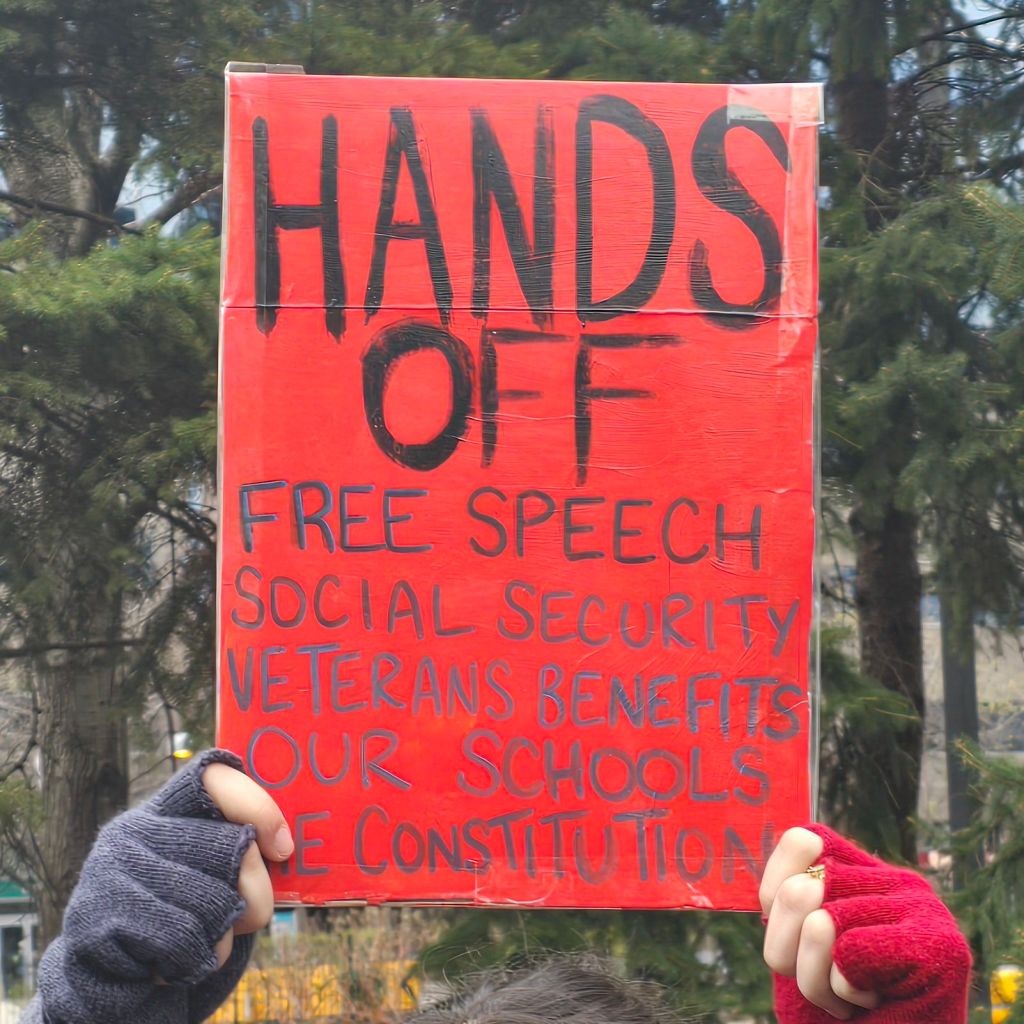
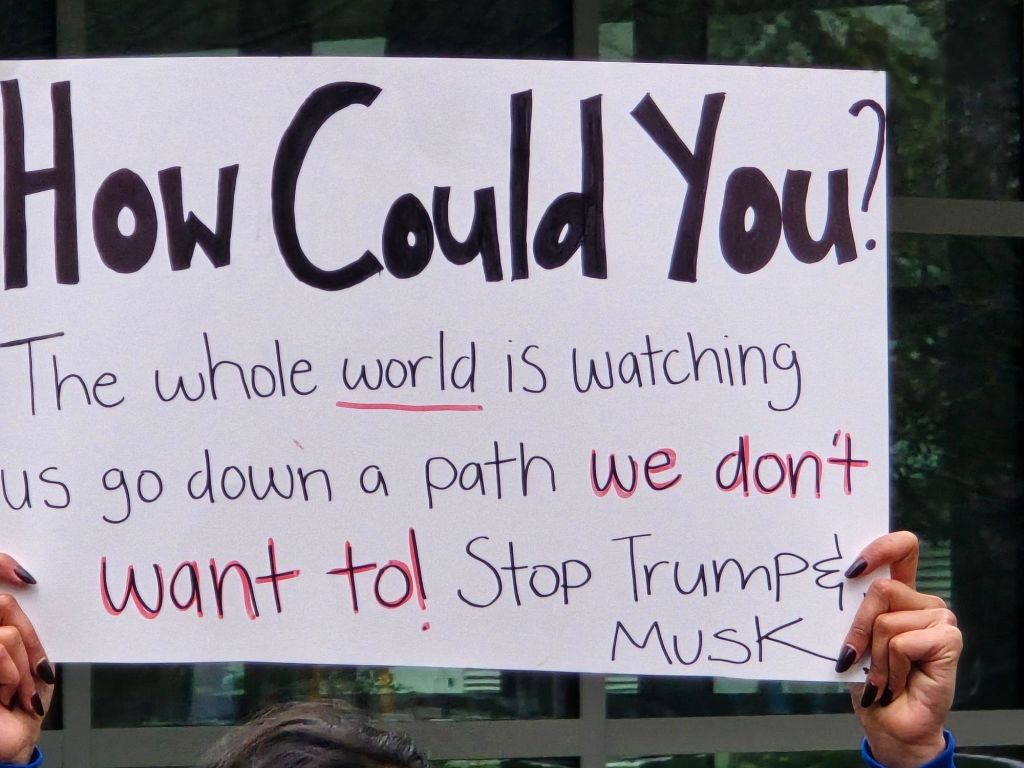
- Speaking of signs … such creativity! Careful thought and consideration clearly went into these signs, messages of extreme concern for things we have been used to taking for granted like due process, libraries, and social security. There was a laundry list, but that is only because everything that serves the common good seems to be on the chopping block under the current regime. And yes, it feels more like a regime than an administration, if I am honest, just three months in.
- A personal observation. This was not my first protest. I always come with my id and a form of payment just in case my right to protest is challenged by law enforcement or things go south. However, this was the first time that I decided it was prudent to bring my Global Entry card, which is government issued ID that declares my US citizenship. I am a US born white woman, yet current events led me to this precaution in these extraordinary times when our human and civil rights are under attack like never before in my lifetime. I will say that the Jersey City police were polite and just asked us to make sure we were not blocking pedestrian access to the PATH station.
- Having been to many protests over the years, standing up for peace and justice from the Gulf War under Bush Senior to Title 42 under Biden, this moment feels different. As Senator Booker named it on the Senate floor this week, this is not a right or left moment but a right and wrong moment. The general vibe of today carried a particular unifying ethos and for lack of a better word, simply felt different, even from the President’s Day event I attended earlier this year. This morning’s energy was a mix of joy and anger. It felt like a community, people showing up when a family member is sick. It felt like an all hands on deck moment. And it gave me hope. Indeed, as we chanted: The people united will never be defeated.
I find myself reminded of and praying with these words from Gaudium et Spes, the Pastoral Constitution of the Second Vatican Council:
“The joys and the hopes, the griefs and the anxieties of the people of this age, especially those who are poor or in any way afflicted, these are the joys and hopes, the griefs and anxieties of the followers of Christ. Indeed, nothing genuinely human fails to raise an echo in their hearts. .. That is why this community realizes that it is truly linked with humankind and its history by the deepest of bonds.”
May we, people of all and no faiths, be bound together in hope and loving action for all that is good. May we resist joyfully. Amen













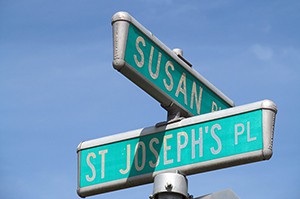
 At the Corner of Susan and St. Joseph