Tag Archives: scripture

Because God Loves Us

When I professed my vows as a Sister of St. Joseph of Peace, I said as part of our vow formula: “In response to God’s call to seek justice, to love tenderly, and to walk in the way of peace …”  What is implied in that introduction to the profession of vows is made clear in today’s first reading from the Letter of St. John:

“Beloved, we love God because he first loved us.”

Having just finished up coursework for a graduate degree in theology, I have big theological words for this thanks to Thomas Aquinas – exitus et reditus. God loves us and so we seek to respond in kind.  But I don’t need big words or theological concepts, because it is written on my heart.

God seeks justice, and so I seek God’s justice. God loves tenderly, and so I desire to love tenderly. God is peace, and so I begin each day praying that I too may walk in peace.

Simple, really, when you get down to it. I love the readings this week from John.

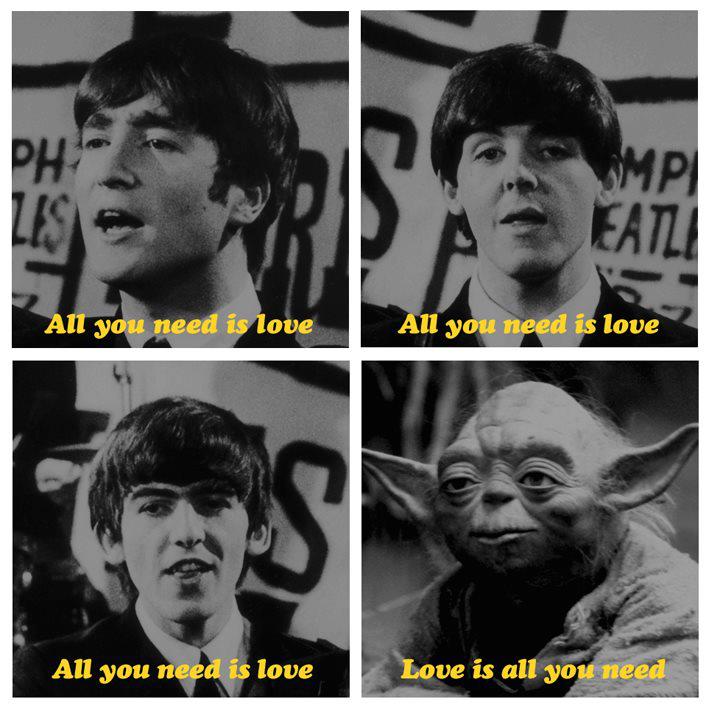
Love. As another John once sang, maybe that is all you need.

LoveisAllYouNeedYoda

Mary’s Yes, Her Magnificat, and Us

Simone_Martini_078The Gospel readings for yesterday and today are really quite powerful stories of the transformative power of God’s love, as evidenced in the life of Mary. Yet they are also so familiar that we are apt to miss the importance of the message for us today.

The essence of yesterday’s Gospel reading (Luke 1: 26-38) is actually well described in our CSJP Constitutions:

Mary is our model of faith
because she listened, pondered,
and contemplated the word of God in her life,
and witnessed to it in action (Constitution 35)

Faced with the surprising news, from an angel no less, that she who has had no relations with a man will nevertheless bear a son, and this son will be be a ruler whose kingdom will have no end, she sensibly asks: “How can this be?” I love this painting of the Annunciation by Simone Martini and Lippo Memmi because Mary’s body language so perfectly captures her, “What???”

I don’t know about you, but I’ve had more than a little bit of “how can this be” in my own life.  While our own surprising moments might not quite compare with the drama of Mary’s yes, the wonder of the incarnation is that each of us is called to bear God’s love and witness to it in action in our own lives and spheres of influence … again and again. Like Mary, we are called to live as if we believe in the power of that love, that truly nothing is impossible for God.  After all, in the words of Margaret Anna Cusack (Mother Francis Clare), founder of my religious community: “There is nothing Jesus desires from us so much as love.”

Today’s Gospel reading (Luke 1: 46-56) has Mary’s response, her Magnificat, which I like to think of as her proclamation of the promise and challenge of that love.  I also find it fitting that she is called to proclaim this message in the company of her cousin Elizabeth, who of course has faced a “how can this be” moment with her own unexpected pregnancy. Together, in community, these two women face the future with hope despite all the evidence to the contrary.

Mary’s Magnificat shifts the focus from “how can this be” to “what does this mean.” In the words of Pope Francis: “We need the Song of Mary, the Magnificat: it is the song of hope, it is the song of the People of God walking through history.” It is a song for all those who “believe in the resurrection of Christ, in the victory of love.”

Because we believe in God’s love, we are called to mercy.

Because we believe in God’s love, we are called to use our strength for those without power, to be in solidarity with those on the margins, and to share our gifts with those in need.

Because we believe in God’s love, made incarnate … indeed, God with us! … we are called to act in love, to be love, to incarnate God’s love in our own lives.

We identify with Mary’s acceptance
of the word of God in her life
and aspire to her spirit of openness
and wholehearted response. (CSJP Constitution 42)

During these last days of Advent as we anticipate the joy of the celebration of the Incarnation, how are we being called to respond in hope to the “how can this be” moments in our own lives?  Where are we called to show mercy? Who are the lowly and powerless we are called to lift up? Where and how might we say, with all our heart: “May it be done to me according to your word.”

The One who calls is Faithful

Over the weekend I was praying with a group of my CSJP Sisters, which is always a heart-stretching and heart-warming experience. As it happens, the prayer sheet we were using had some weird sort of typo where the characters “g=” were accidentally inserted right before the word “faithful.”  During the quiet reflection time, I couldn’t get the resulting formula out of my head or heart:

g=faithful

God equals faithful. God is faithful. So simple yet so very powerful. I almost feel like I should engrave that on something or post it on my wall. When life seems complicated or the path ahead unsure, remember, God is faithful.

Then I prayed with the readings for this Gaudete Sunday, and was stopped in my tracks by the second reading from Thessalonians:

Brothers and sisters:
Rejoice always. Pray without ceasing.
In all circumstances give thanks,
for this is the will of God for you in Christ Jesus.
Do not quench the Spirit.
Do not despise prophetic utterances.
Test everything; retain what is good.
Refrain from every kind of evil.

May the God of peace make you perfectly holy
and may you entirely, spirit, soul, and body,
be preserved blameless for the coming of our Lord Jesus Christ.
The one who calls you is faithful,
and he will also accomplish it.

The one who calls is faithful. The one who calls will accomplish it. It is not up to me. It is not about me or us. Authentic call is about responding to God’s faithful love.

This weekend, I have several friends who have responded to the one who calls in faith, trust and love in special and powerful ways. My friend Stephanie married her sweetheart Matt. My friend Graham was ordained as a deacon on the path to being ordained as a priest. Another friend was in Peru witnessing the final profession of one of her Sisters. And today, my friend Belinda professes her final yes as a Benedictine Sister.

My prayer for all of my friends who are responding to the one who is faithful with a big “YES,” and this includes myself and the four CSJP Sisters who are stepping into the circle of leadership with me in January as we begin our term of office on the congregation leadership team, is just what this reading says.

May we rejoice always
Praying and giving thanks without ceasing, no matter what
May we embrace God’s will in our lives and in the lives of those with whom we are called to journey.
Spirit of God, soak us with your goodness and surprises.
Open our ears to your prophetic word.
Guide us on the path of creative experimentation.
Lead us to goodness and light and everything which gives life.
God of peace, strengthen our spirit, soul and body so that we may be ready,
Ready to respond joyfully always to your faithful love.
Help us to trust that it is YOU who works through, in, and with us.
You have called, God of peace and love and joy.
Thank you. Thank you. Thank you.

Amen

How We Live Matters – Second Sunday of Advent

Prepare_the_WayAs I was praying this morning with the readings for this second Sunday of Advent, the thought that came to me was this … how we live matters.

“A voice cries out: in the desert prepare the way of the LORD,” (Isaiah 40:30) … In the literal and figurative deserts of our world today, when does my voice cry out? When I see mouths parched by thirst or children hungry, am I moved to cry out and act for justice? Do I proclaim God’s love and witness to that love in action? What about closer to home? How am I present and a sign of hope to people living through the desert moments of their lives?

“Kindness and truth shall meet; justice and peace shall kiss.” (Psalm 85) … Is this true in my own heart? Is this how I witness to God’s transformative love in my life? Does the truth of the Incarnation manifest itself in my interactions with my brothers and sisters, both those I am related to by blood and those I am related to in the heart and mind of God?

” … what sort of persons ought you to be, conducting yourselves in holiness and devotion, waiting for and hastening the coming of the day of God … Therefore, beloved, since you await these things, be eager to be found without spot or blemish before him, at peace.” (2 Peter 3: 11,14) … We wait in joyful hope, but we live in the present moment. If God’s reign is to come, do I live as if I really believe that it begins with me, here, now? Do I live my life each day, do I develop healthy habits of the heart which are reflective of my hope in God’s reign of justice and peace for all?

“A voice of one crying out in the desert: ‘Prepare the way of the Lord, make straight his paths.'” (Mark 1: 2-3)  …. In the end, the message it seems is that how we live matters. God can make straight lines out of crooked ways, as the saying goes, but so too can I, in my own life, relationships, habits, and commitments.

I’m not a scripture scholar, nor am I a practiced preacher. But when I pray with these readings this second Sunday of Advent, I find myself reflecting on the ways that God’s love is (or isn’t) reflected in my daily life. If how we live matters, how am I living? And as I prepare for the celebration of the remarkable reality of God being with us, what difference does that make in my life and in my heart? How am I preparing room and making way?

Write Your Story: A Video Prayer Reflection

So I had lots of plans for today. Lots and lots of plans to do lots of important things. But first I went for a long walk and had a little conversation with God, as I’m apt to do on long walks.  That’s where the poem I posted earlier today came from. When I returned home and turned on my computer to start working on Chapter 6 of my thesis, instead I felt an overwhelming urge to make a video prayer reflection set to “Write Your Story” by Francesca Battistelli.

A little bit of background. I’d never heard this song or the artist (it’s not one of my regular musical genres) until this summer when I was planning a retreat for Catholic Sisters in their 40s with some friends from Giving Voice. My friend Rejane suggested this song for one of our prayer experiences during the retreat, where we were also going to invite folks to write a six word memoir (which is an excellent exercise by the way–try it!).

On the first listen, I wasn’t super excited about the song. But it got stuck in my head. And my heart. And so I listened to it … again, and again, and again. As it happens, about this time I was invited by my community to discern something pretty huge that seemed beyond anything I could imagine for me right now, but which at the same time seemed like maybe what God was in fact inviting me to next. At this point, it would probably help if you heard the song I’ve been praying with since July:

Listening to the song, I can’t help but be reminded of Jeremiah 29: 11: “For I know well the plans I have in mind for you, plans for your welfare and not for woe, so as to give you a future of hope.” (Of course, just a couple of chapters earlier Jeremiah realized he had been “duped”!)

Discernment is about listening to your heart. But discernment is also about listening to what God has written on your heart, and opening yourself up to what has not yet been written. It’s all well and good writing those words here, or even discerning something huge. Then comes actually stepping into the new chapter, taking a deep breath and learning to trust.

Apparently that was what I needed to do today, take a deep breath and sink into God’s love, because all day turned out to be an unplanned prayer day. Or, at least unplanned by me. The mischievous Holy Spirit may have had other plans. I trust that what needs to get done, my many plans for important things, will get done.

I mentioned the exercise we did on retreat where we invited folks to write their memoir in six words. Here’s mine:  Nonstop brain. Opened Heart. Seeking Peace.

A bit apocalyptic, but sound advice

homer_simpson_end_is_nearToday is the last day of the church year. Advent, believe it or not, starts tomorrow!  The liturgical readings the past few weeks have been, well, a bit apocalyptic, and focused on the end times. A case in point is today’s Gospel (Luke 21.34-36).

“Jesus spoke to his disciples about the end which is to come. He said, ‘Be on guard so that your hearts are not weighed down with dissipation and drunkenness and the worries of this life, and that day catch you unexpectedly, like a trap. For it will come upon all who live on the face of the whole earth. Be alert at all times, praying that you may have the strength to escape all these things that will take place, and to stand before the Son of Man.’”

Is the end of the world coming tomorrow?  Most likely not. Yet it is funny how sometimes we act as if the littlest things are the end of the world, like missing out on a black Friday sale, yet treat life-diminishing realities like embedded structural racism and enduring poverty lightly, if at all.

But Jesus tells us … be alert. Be present in the here and now. Resist the death-dealing and life-diminishing realities.  Live as if you believe … in love, in goodness, in life. We choose so much in our lives, so what would happen of we chose to live them fully as if today is the only day we have, while still believing in the promise of tomorrow?

Those are my hope filled apocalyptic thoughts for this last day of the liturgical year.

Peace

And Jesus Wept … praying for peace

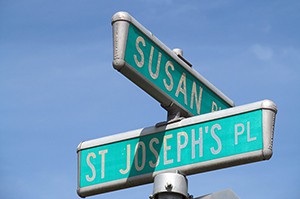
And Jesus Wept memorial, St. Joseph's Catholic Church across the street from Oklahoma City Bombing Memorial
And Jesus Wept memorial, St. Joseph’s Catholic Church across the street from Oklahoma City Bombing Memorial

Today’s Gospel from Luke is a poignant one:

“As Jesus drew near Jerusalem, he saw the city and wept over it, saying, ‘If this day you only knew what makes for peace–but now it is hidden from your eyes.'”

The headlines of course are filled with the recent killings in Jerusalem and  the continued bloodshed in Iraq and Syria, not to mention the political infighting in Congress. The headlines gloss over or ignore other situations of violence, such as poverty and oppression. There is violence in our streets, our homes, our very hearts.

But Jesus tells us, there is more. More is possible. Peace is possible.

Imagine Jesus standing in our midst today, seeing that we have everything within us which makes peace possible, should we choose to see and live it:

Our goodness. Our love. Our compassion. Our possibility. Our mercy. Our yearning for justice, equality, and reconciliation.

Can we open our eyes and our hearts to the reality that peace is possible?

Can we choose, live, and act for peace, in our our lives?

Can we start today?

Risk and Call

Today’s Gospel reading can be a puzzling one. It’s the parable of the talents (also the name of an AMAZING book by Octavia E. Butler by the way, but that is a digression). In this Gospel passage from Matthew, we hear the story of the man who, before going way on a journey entrusts his servants with his money. Two servants are rewarded upon his return for trading and increasing the money entrusted to them,  while the third is chastised for burying the money out of fear until his master’s return. Is Jesus advising on investment strategy?  What exactly is he getting at with this parable?

In the little booklet I use for daily prayer, there’s a reflection by a Good Sam Sister from Australia that  helps makes the message very personal, practical, and real:

“The risks that earn us affirmation as ‘good and trustworthy’ are the ordinary kingdom exchanges of daily life; forgiving rather than burying a grudge in our hearts; standing by one another in times of sorrow, failure, or misunderstanding; giving someone the benefit of the doubt; associating with those whom many consider the ‘wrong kind’ of unacceptable people;  laying down one’s life for another–perhaps a misunderstood friend, rebellious child, a terminally ill spouse, aged parents. All this ‘now’ effort is preparing us for the ‘not yet’ entry into the kingdom.” – Sr Verna Holyhead, SGS (Give us This Day reflection for this Sunday’s readings)

So one way of reading the parable is this: how much we are really to risk sharing ourselves and living into the not yet aspects of the reign of God in the here and now? This way of reading resonates with me, and it resonates with my own journey of faith and sense of call. God seems to be forever inviting me to risk vulnerability, to open my heart to others, to let go of my fears and my need to control situations that really, if I am honest, are entirely beyond my control. It’s in the unexpected and the ordinary that I am challenged to grow into the life of love that is God’s never-ending invitation.

My experience also tells me that when, in these moments of grace, I am able to risk vulnerability and trust God’s call, then the result is way more about God than it is about me. Sometimes, in those moments of grace, we’re even able to break through our own limitations and step into new territory where the Spirit leads and we follow. And that, my friends, is pure blessing.

Disturbed

Jesus Eats with Friends by Rick Beerhorst

The little book that I use for my morning prayer and reflection on the readings of the day has a beautiful (and challenging) reflection by Jean Vanier, part of which I’d like to share here:

The cry of the oppressed, the lonely, and the rejected,
is essentially a cry
for recognition, presence, and communion.
Their cry disturbs,
creates fear,
provokes rejection.
But if they are listened to,
they can also awaken the hearts
of the powerful and the wise,
calling them to change,
to conversion;
calling them not just to organize and do things
with generosity
but to enter into communion with them. …
So it is that the Spirit of Jesus
through all the pain and disturbance
leads us to something new,
a form of chaos
from which is gradually born
a new love
flowing from the heart of God.
~Jean Vanier, 
Jesus The gift of Love

Powerful, isn’t it? Of course, Jean Vanier is the founder of L’Arche so he knows intimately and concretely that of which he writes. And of course the reading was included in the Give Us this Day book today because of our Gospel reading from Luke (14:12-14) where Jesus dines at the home of a Pharisee and challenges him to “invite the poor, the crippled, the lame, the blind” to his next banquet, those who cannot repay with an invitation in kind.

Disturbed.

That is an appropriate word, especially given that this is the first word of the Chapter Call that was affirmed at my religious community’s general Chapter in September.

Disturbed by the Spirit, we recommit ourselves to Jesus’ way of radical hospitality.

We are called to a deeper and wider living of community for mission in company with poor and marginalized people.  Our contemplative discernment pushes us, individually and as Congregation, to action; deeper mutual support enables us to take risks for justice, peace and the integrity of creation.

As disciples of Jesus, we respond anew to the call of Mother Clare to be “brave, noble, large-minded and courageous souls.”

We will be living into this Call as a Congregation over the next six years. I’m not sure exactly where it will lead,but I do know that it will challenge us,  and I suspect, awaken our hearts and give us new life and energy as we respond anew to the call to be a community of peace.

No Longer Strangers … a Scripture reflection

ephesiansI was invited to give a reflection on Ephesians 2:12-22 today at an all school mid-day prayer service held in our chapel at Catholic Theological Union.  It was a wonderful opportunity to ponder the word of God in the context of our community. Here’s what I shared:

As a Sister of St. Joseph of Peace, I was delighted when I was invited to offer a short reflection on this reading from Ephesians, in which the theme of peace is so strong.

“For he is our peace … He came and preached peace to you who were far off and peace to those who were near.”

I can’t help but hear echoes of my religious community’s Constitutions, where we say:

“Christ is our peace, the source of our power. United with him we engage in the struggle against the reality of evil and continue the work of establishing God’s reign of justice and peace.”

Christ is our peace, calling us to unity. But if we look around, so much divides us. Dividing walls abound, some of them quite literal like the ones we build on our borders.

Christ is our peace, but WE must make that peace known in our world. In the words of Paul VI who was beatified in Rome just this past weekend: “If you want peace, work for justice.”

As I have been sitting with this reading these past few days, I have been struck by another line from Ephesians:

“So then you are no longer strangers and sojourners…”

In 2003, the Bishops of the United States and Mexico crossed the dividing wall between our nations, united as one Church, to reflect on the reality of immigration and the need for immigration justice.

They called their joint pastoral letter: “Strangers No Longer: Together on the Journey of Hope.”

In the letter, the Bishops reflect on themes of migration and hospitality in Scripture:

  • From Abraham and Sarah offering hospitality to three strangers, who were actually a manifestation of God
  • To the edict to welcome the stranger, remembering Israel’s own exile in Egypt
  • To the Holy Family’s own flight into Egypt
  • To the reading we have today, of which the Bishops say:
    “The triumph of grace in the Resurrection of Christ plants hope in the hearts of all believers and the Spirit works in the Church to unite all peoples of all races and cultures into the one family of God.”

Just look around our community here at CTU. Our students come from places that are far and places that are near.  We come from places of relative peace and prosperity and places that have experienced deep division and heart wrenching violence.

We come to learn to be unifiers, reconcilers, bearers of mercy and builders of peace.

CTU is now even a place of hospitality, welcoming immigrant women and families in the Marie Joseph House of Hospitality across the street.

We have also been invited to participate in a practical work of mercy this week through a winter clothing drive for our immigrant brothers and sisters.

As the CTU community, we are no longer strangers and sojourners, but fellow citizens with the holy ones and members of the household of God.

May we be reconcilers in our families and communities.

May we welcome the stranger and work for justice.

May we seek, build, live, and bring peace.

Amen.