Tag Archives: writing

The Dignity of Love and Public Service

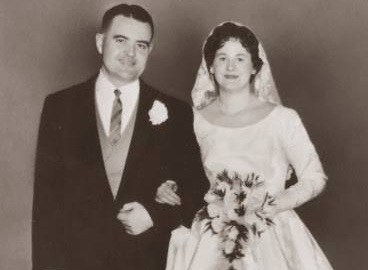
Today would have been my parents’ sixty-fifth wedding anniversary. Theirs was a partnership that was grounded in their love of God, one another, and all of God’s people, especially those who are experiencing poverty. This morning in prayer, as I reflected on what is happening in our country and to the very weft and weave of our democracy, I give thanks for all they taught me through their example about the dignity of love and public service. I am also calling for their intercession for our country at this time.

They both began their careers in public service before they met. My Dad came to Washington from Iowa in 1956 to work at the US Patent Office before going to law school at George Washington University. My mom grew up in the DC Suburbs and worked in office administration for the Department of Justice before working for NATO in Europe (Yes, she was in Paris in the 1950s!).

In my Dad’s memoir, Me? I’m from Iowa, he shares how during their courtship and after they were married, they talked about faith and politics, which were always intertwined throughout their lives.

“After meeting in May, we went out a lot. And we talked, and talked. Starting with religion, we discussed why we were both Catholic, and found that we had some devotions in common. We talked about international issues, Communism and its failings, and the need to get involved in politics. Following up on the political discussions we had during our dating and while on our honeymoon, we said now is the time to move ahead.”

Over the course of their marriage, my parents participated in the political campaigns of others and for my Dad’s own campaigns for local elected office. Dad served as an elected judge and later member of the County Council for several decades, before moving into transportation policy at the state and federal level. Mom worked on the staff of members of Congress and in the area of social work to support incarcerated people. Throughout it all, they were guided by their faith and the Gospel call to seek justice, especially for the most vulnerable.

My siblings and I grew up with the expectation that it was our responsibility to leave the world a better place than we found it, and most importantly to use our God given gifts in service of the common good. We learned first hand the promise and possibility of good government to make systemic change in support of human dignity, such as when my Dad helped to pass fair housing laws and desegregate the public schools. We saw how important it is to use our voice and influence to advocate for justice, such as when my Mom joined protests organized against discriminatory housing sales practices in our town. There are so many more examples of their witness in action. It is no coincidence that at one point or another, all of their five children worked directly in public service.

Me in the corner at the feet of my Mom (Left), as my Dad (Right) talks with Senator Barbara Mikulski at a political event

During these times, I am feeling the pull to call on our Cloud of Witnesses. This morning I am asking my parents to pray for our country, for all public servants who are under attack, for the health of our democracy, and for those who are already being impacted by the takeover of government agencies and the rapid dismantling of life-saving programs. Eileen Schmelzer Francois and Frank Francois, pray for us.

On the Value of Work and Leisure

When I was a novice, we attended classes with those in formation with other religious congregations. One day, we were sharing the words of our different Constitutions on the vows. That is when I discovered that what has become one of my favorite passages in our CSJP Constitutions is rather unique. Not only does it talk about the value of leisure, it is part of our vow of poverty section!

In solidarity with our sisters and brothers

we engage in human labor

as a means of service and sustenance.

We recognize the value of leisure

as contributing to restoration and wholeness.

In these ways we come to share

in the creative power of God.

(Constitution 54)

Work is good and important and part of the way we participate in the creative power of God. But so too is leisure. We are called to be whole persons, and this requires making time and space for rest, relaxation and renewal.

I am so blessed to be a Sister of St. Joseph of Peace for many reasons, including this commitment to holding each other accountable to this balance.

Starting today I am stepping away from my day to day ministry life for a mix of some restorative work and leisure. Over the next ten days or so, I will be visiting with friends and family. I will also be joining two sister writer friends for a writing retreat. Did I mention how blessed I am that my community supports me in making time and space for this in my busy life?

How are you making space for restoration, wholeness, and the creative power of God in your life these summer months?

Sense of Place

This Sunday morning, as I listened to public radio and live streamed mass, I thought about the importance and influence of our sense of place. In our digital age, we can live stream news and even liturgy from anywhere in the world. Yet what did I chose to do? I live streamed the local public radio station and the local Sunday liturgy.

Now, were I at home in New Jersey, this would be unremarkable. As it happens, however, I am spending the month of October as a short term resident scholar at the Collegeville Institue at St. John’s University in Minnesota. When I applied for, and received, this residency opportunity, it was in a pre-pandemic world. I researched the local area. Looked forward to attending mass and prayers with the monks at the abbey and the sisters at the nearby monastery, both Benedctine. I was excited to participate in all the public lectures and other opportunities a university environment provides, especially having access to a library, as well as interacting with the other resident scholars.

Then of course, the pandemic happened. I was so grateful that the Collegeville Institute and university decided to stay open and welcome scholars, even though of course things had to be adapted for public health reasons. It has been a graced opportunity to have the time and space to read, write, and reflect. I have certainly taken advantage of the wonderful grounds, which are designated as an arboretum. The library is open, and thanks to the wonder of electronic databases I’ve been able to reserve and pick up books. Sadly, the St. John’s Bible display is closed, but I looked through the books on display in the bookstore. As to the other scholars, we’ve waved to each other on our solitary walks and had some socially distanced interactions. A different experience than the one I’d envisioned, but a blessed one nonetheless.

As I finish my month here, I feel grounded in and gifted by this place. The Collegeville Institute is nestled in the woods upon a lake. It is no surprise that I have a sense of place here, because as it happens that was intentional.

The monks insisted on the graceful architecture of Marcel Breuer, who conceived of apartments walled with windows to maximize the sense of place, in the midst of natural beauty.

History of the collegeville institute

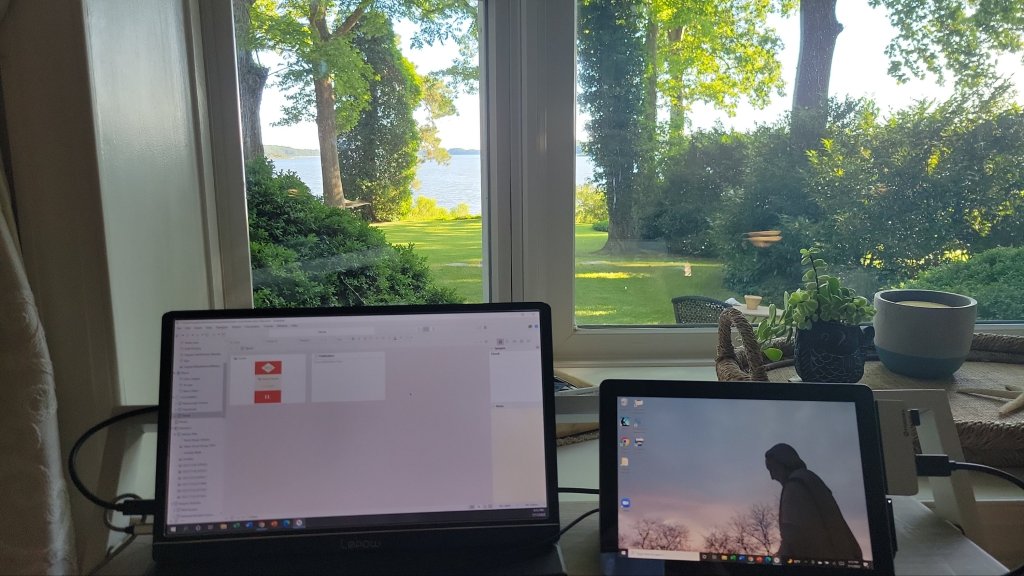
My work space looks out at the trees and the water and my squirrel friends. As I’ve worked and prayed, I’ve watched the seasons change and walked the trails through the woods and fields, which are just outside my door!

But back to my morning realization. Why did I go to the effort, shortly after I arrived, to download the Minnesota Public Radio app to my phone? After all, I already had the WNYC app downloaded, which has essentially the same NPR programs that I am accustomed to, although one hour earlier. Partly I suppose it’s an adaptation of habit. Back in the day when you actually listened to the radio at home ON a radio, which I now only do in the car, of course I’d listen to the local public radio station. Here in the 21st Century, I made a concious choice to download the app for the local public radio station to help me tap into the local, if just a bit.

This morning I reflected that this has to do with the importance and influence of my sense of place on my imagination and being. In away, during this weird covid time, it’s more important to make these concious choices to get the lay of the land and to BE in the land, even if virtually. Otherwise, with little social interaction and most time spent safely inside, wherever we are, we can settle into a kind of no land.

It is also important for me to recognize that I am on the land of the Mdewakanton, Anishinabewaki ᐊᓂᔑᓈᐯᐗᑭ, and Očhéthi Šakówiŋ. (If you want to know the native peoples of the land where you are, go to https://native-land.ca/).

My first two weeks here were an official quarantine, after my travel from New Jersey. Since then I’ve had more time to walk on the grounds of the unviersity and even did some early Christmas shopping at the bookstore–masked and following social distance guidelines of course. But I’ve not yet made it into the Abbey Church.

Instead, each Sunday I have live streamed mass from the Abbey. Is it the same as physically being there? Of course not, and I do plan to go to daily mass before I leave, when there will presumably be less people present. Yet even participating in the Abbey Sunday Liturgy from my couch, looking out at the tranquil scene outside my window and then back to the screen, I feel connected. Connected to the monks and the other people there, in their masks, socially distanced, praying in this space, from this place, for the needs of the world.

Among the Trees

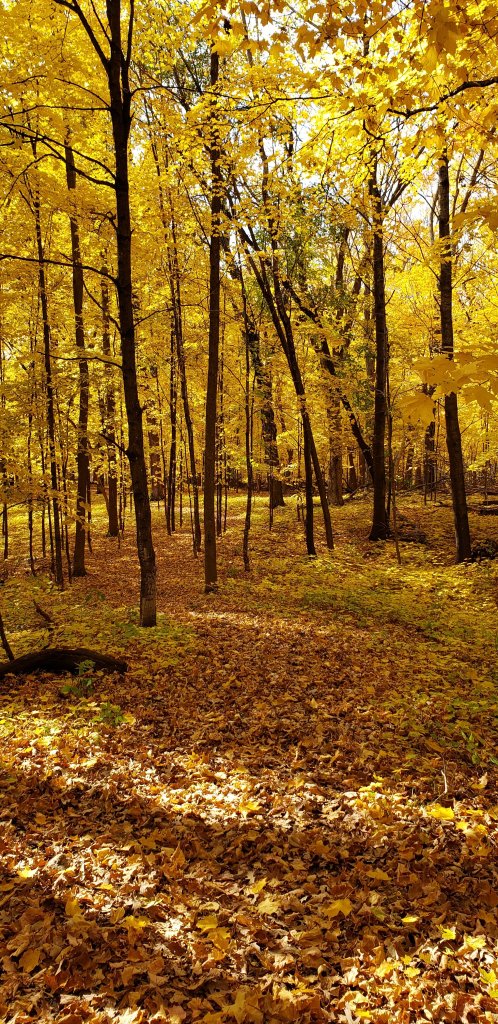
Walking among the trees near the Collegeville Institute

This month I have the incredible privilege to be a short term scholar at the Collegeville Institute at St. John’s University in Minnesota. It is an unstructured time to read, write and reflect. I am working on a couple of projects: reflections on St. Joseph and exploring how we cultivate peace in chaotic times.

One way I am cultivating peace within myself while chaos abounds in our political situation is by taking long walks each day. Incredible autumn beauty is just outside my door here in Collegeville.

On this afternoon’s walk, the trees were calling and shining in the light. I was reminded of this poem by Mary Oliver. Really a prayer and a way to engage the chaos from a space of peace.

When I am Among the Trees

By Mary Oliver

When I am among the trees,
especially the willows and the honey locust,
equally the beech, the oaks and the pines,
they give off such hints of gladness.
I would almost say that they save me, and daily.

I am so distant from the hope of myself,
in which I have goodness, discernment,
and never hurry through the world
but walk slowly, and bow often.

Around me the trees stir in their leaves
and call out, “Stay awhile.”
The light flows from their branches.

And they call again, “It’s simple,” they say,
“and you too have come
into the world to do this, to go easy, to be filled
with light, and to shine.”

© 2006 by Mary Oliver
Published by Beacon Press in Thirst, p. 4

Margaret Anna Fridays – on the gift of writing

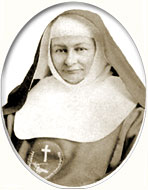
Mother Francis Clare (Margaret Anna Cusack)

Periodically on Fridays I will share some words of wisdom from the founder of the Sisters of St. Joseph of Peace. Known in religion as Mother Francis Clare, Margaret Anna Cusack was a prolific writer in her day. Happily, thanks to public domain and the many internet book projects, much of her writing is now available online. As someone who herself has been slowly growing into her own identity as a writer, I have a special affinity for that aspect of her story. I’m willing to bet that if she were alive today, she’d be using social media and blogs to spread the gospel of peace!

Since God has been pleased to give me a gift of writing,… I feel I would be ungrateful to God and undutiful to the Church if I did not use my poor efforts on the side of truth and peace.