“Reality” and Discernment – Thoughts on “The Sisterhood”

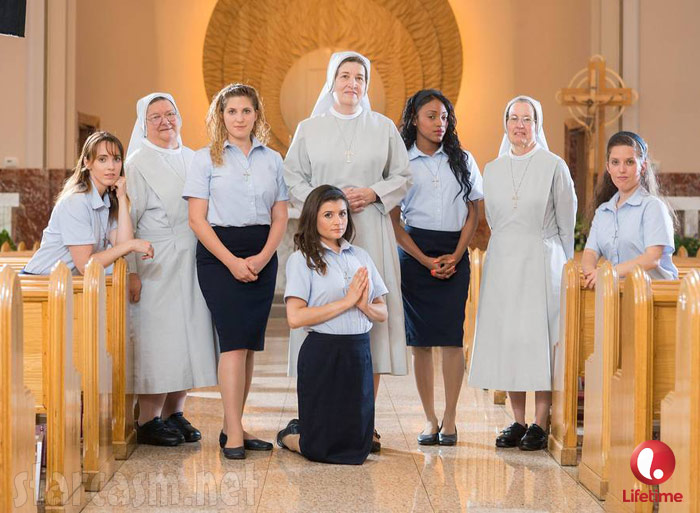
The_Sisterhood_Lifetime_convent_reality_showOk, I’ll admit it … on more than one occasion during the early stages of my religious formation I found myself thinking, this would make for good reality tv. I was living in the alternate reality of a formation house with two other novices, my novice director and a professed sister. We’d all left the lives we were living to form a community together. In the midst of our formation classes and opportunities for ministry, prayer, and discernment, we also had to negotiate the kitchen, sharing common space, and simply learning how to be together.  That line from MTV’s Real World would periodically go through my head: “This is the true story of five strangers picked to live in a house, work together and have their lives taped, to find out what happens when people stop being polite and start getting real.”  Thankfully, there were NO cameras (although I did of course blog the experience myself).

Reality tv is all about “drama” (in quotations because really, how much of reality tv is actually real?) and if anything is dramatic, discerning a major life choice like joining a religious community and professing the vows of poverty, chastity, and obedience to God for life is certainly dramatic. Then there’s just the daily drama of transition, change, and gradual incorporation into religious life. Add in cultural dynamics, generation gaps, and the fact that you’re talking about actual human beings who have a tendency to be human and, well, there were moments that might make for entertaining television.

So, it’s not really a surprise that someone else not only thought about the idea but managed to bring some version of it to television. Despite the subtitle, as far as I understand, Lifetime’s The Sisterhood: Becoming Nunswhich premieres tonight, is not actually about women in religious formation as Sisters. Instead, it follows a group of twenty-something young women who might possibly be interested in religious life as they visit three convents to meet the Sisters and learn more about what it would be like to be a Sister. I suppose it’s more like a prospective student’s college tour where you stay on campus, eat in the dining hall, and go to class. Except that there are cameras and it is scripted into hour long episodes to be broadcast on national television.

My Catholic social media feeds are all abuzz about the show. Some are concerned that it only shows religious communities who wear a habit rather than those like mine who wear simple dress (as it happens, I do know that the producers reached out to a wide variety of communities so I don’t think it’s necessarily an intentional bias, but more a question of who agreed to take the risk of participating in a reality tv show). Others are concerned about the possibility of reinforcing stereotypes about nuns as being strict, austere, and living a life of sacrifice and “giving up” rather than a life of joy, love and service (much of the buzz I’ve seen so far keeps referencing scenes where the young women are told they cannot wear make up or use cell phones during their visit). And others seem to be hopeful, noting that if even one young woman who might have a vocation gives religious life some thought because of the show, then it would be a good thing. These all seem to be valid points to me.

My main caution is that even though the young women are not in formation, they are at least considering walking a very sacred and personal journey of transformation and a major life choice (unless they are actually just actresses but even then, the Holy Spirit can be sneaky so you never know). Having blogged my own way through formation, I know first hand that it is complicated and not so easy to share the call you feel in your heart or the movements of the Spirit. Then add in to the mix a third party producer who is most interested in ratings and advertising revenue, and I think you can understand my cautionary concern. Plus the producers are best known for Breaking Amish which brings a whole lot of different concerns that I will leave to your imagination.

I’ve not watched the show. I’m not sure I will watch the show, although I’m realizing I probably should, if only to see what images are being projected into popular culture about religious life. I do know that a number of younger Catholic Sister friends are planning to live tweet using the hashtags #thesisterhood and #nuntv. If I end up watching it, I might be live tweeting it myself.

And Jesus Wept … praying for peace

And Jesus Wept memorial, St. Joseph's Catholic Church across the street from Oklahoma City Bombing Memorial
And Jesus Wept memorial, St. Joseph’s Catholic Church across the street from Oklahoma City Bombing Memorial

Today’s Gospel from Luke is a poignant one:

“As Jesus drew near Jerusalem, he saw the city and wept over it, saying, ‘If this day you only knew what makes for peace–but now it is hidden from your eyes.'”

The headlines of course are filled with the recent killings in Jerusalem and  the continued bloodshed in Iraq and Syria, not to mention the political infighting in Congress. The headlines gloss over or ignore other situations of violence, such as poverty and oppression. There is violence in our streets, our homes, our very hearts.

But Jesus tells us, there is more. More is possible. Peace is possible.

Imagine Jesus standing in our midst today, seeing that we have everything within us which makes peace possible, should we choose to see and live it:

Our goodness. Our love. Our compassion. Our possibility. Our mercy. Our yearning for justice, equality, and reconciliation.

Can we open our eyes and our hearts to the reality that peace is possible?

Can we choose, live, and act for peace, in our our lives?

Can we start today?

Risk and Call

Today’s Gospel reading can be a puzzling one. It’s the parable of the talents (also the name of an AMAZING book by Octavia E. Butler by the way, but that is a digression). In this Gospel passage from Matthew, we hear the story of the man who, before going way on a journey entrusts his servants with his money. Two servants are rewarded upon his return for trading and increasing the money entrusted to them,  while the third is chastised for burying the money out of fear until his master’s return. Is Jesus advising on investment strategy?  What exactly is he getting at with this parable?

In the little booklet I use for daily prayer, there’s a reflection by a Good Sam Sister from Australia that  helps makes the message very personal, practical, and real:

“The risks that earn us affirmation as ‘good and trustworthy’ are the ordinary kingdom exchanges of daily life; forgiving rather than burying a grudge in our hearts; standing by one another in times of sorrow, failure, or misunderstanding; giving someone the benefit of the doubt; associating with those whom many consider the ‘wrong kind’ of unacceptable people;  laying down one’s life for another–perhaps a misunderstood friend, rebellious child, a terminally ill spouse, aged parents. All this ‘now’ effort is preparing us for the ‘not yet’ entry into the kingdom.” – Sr Verna Holyhead, SGS (Give us This Day reflection for this Sunday’s readings)

So one way of reading the parable is this: how much we are really to risk sharing ourselves and living into the not yet aspects of the reign of God in the here and now? This way of reading resonates with me, and it resonates with my own journey of faith and sense of call. God seems to be forever inviting me to risk vulnerability, to open my heart to others, to let go of my fears and my need to control situations that really, if I am honest, are entirely beyond my control. It’s in the unexpected and the ordinary that I am challenged to grow into the life of love that is God’s never-ending invitation.

My experience also tells me that when, in these moments of grace, I am able to risk vulnerability and trust God’s call, then the result is way more about God than it is about me. Sometimes, in those moments of grace, we’re even able to break through our own limitations and step into new territory where the Spirit leads and we follow. And that, my friends, is pure blessing.

Margaret Anna Fridays – on the gift of writing

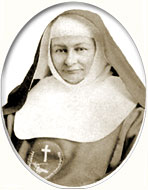
Mother Francis Clare (Margaret Anna Cusack)

Periodically on Fridays I will share some words of wisdom from the founder of the Sisters of St. Joseph of Peace. Known in religion as Mother Francis Clare, Margaret Anna Cusack was a prolific writer in her day. Happily, thanks to public domain and the many internet book projects, much of her writing is now available online. As someone who herself has been slowly growing into her own identity as a writer, I have a special affinity for that aspect of her story. I’m willing to bet that if she were alive today, she’d be using social media and blogs to spread the gospel of peace!

Since God has been pleased to give me a gift of writing,… I feel I would be ungrateful to God and undutiful to the Church if I did not use my poor efforts on the side of truth and peace.

Vow-iversary

Three years ago today I professed my final and forever YES as a Sister of St. Joseph of Peace. In our chapel at St. Mary-on-the-Lake, in the presence of my congregation leader, community members, family and friends, I said:

In gratitude for the wondrous gift of God’s love, I ask to life a life of love and service as a Sister of St. Joseph of Peace.  I pray that each day of my life I may “take that step which will lead [me] into the deepest depths of the heart of Jesus.” (Mother Clare)

Trusting in God with all my heart and relying on the support and example of our sisters and all others who touch my life,  I hope to live with an open heart by listening, pondering, and contemplating the word of God in my life and witnessing to it in action for justice and peace.

In response to God’s call to seek justice, to love tenderly, and to walk in the way of peace, I Susan Rose Francois, in the presence of Margaret Byrne, Congregation Leader, and in the presence of the community gathered here, vow to God, poverty, celibacy, and obedience for life according to the Constitutions of the Sisters of St. Joseph of Peace.

Three years later I continue to be so very grateful for God’s love and the opportunity to respond to that love as a Sister of St. Joseph of Peace. I continue to feel the call to live with an open heart and to seek justice, love tenderly, and walk in the way of peace. New adventures are still to come as I continue to take steps which lead me deeper into the deepest depths of the heart of Jesus. And for that, my friends, I am very grateful!

Signing my final profession of vows in our community vow book

Margaret Anna Fridays: Vocation Awareness Week Edition

Mother Francis Clare (Margaret Anna Cusack)

Periodically on Fridays I will share some words of wisdom from the founder of the Sisters of St. Joseph of Peace. Known in religion as Mother Francis Clare, Margaret Anna Cusack was a prolific writer in her day. Happily, thanks to public domain and the many internet book projects, much of her writing is now available online.  She was a woman of her time and yet, ahead of her time in many ways. In this quote, for example, she writes about the type of Sisters she wanted to join her new community. She recognized that the mission to promote peace in family life, in church, and in society required a certain type of person.

We are beginning a new Order. We want brave, noble, large-minded, courageous souls…”
~Mother Francis Clare to the new community, 1887

She wrote those words in 1887, and our history tells us that this is who God called to our Congregation. At our most recent Chapter in September, we responded anew to her call in our Chapter Call:

Disturbed by the Spirit, we recommit ourselves to Jesus’ way of radical hospitality. 

We are called to a deeper and wider living of community for mission in company with poor and marginalized people. 

Our contemplative discernment pushes us, individually and as Congregation, to action; deeper mutual support enables us to take risks for justice, peace and the integrity of creation.

As disciples of Jesus, we respond anew to the call of Mother Clare to be “brave, noble, large-minded courageous souls.”

This week is National Vocation Awareness Week here in the U.S., and I happen to be attending the 25th anniversary convocation of the National Religious Vocation Conference in Chicago with three of my CSJP Sisters.

Please join me, us, in praying for women (and men) who might be hearing God’s call to be brave, noble, and large-minded, especially those who might be called to live out this call as Sisters of St. Joseph of Peace or Associates.

If this was who was needed to promote peace in Mother Francis Clare’s time, it certainly seems true today in 2014.

FOMO, Religious Life, and Vocations

i love rel lifeI recently listened to an episode of This American Life which expounded on the phenomenon of FOMO, or fear of missing out. In the podcast, Alex Blumberg (formerly of the Planet Money podcast, now trying to get his own business off the ground) is speaking to a venture capitalist, seeking to get him to finance said new business. From the episode:

Alex: And Chris [venture capitalist] is like a teacher handing me the answers to a test he’s about to give, explaining exactly what he wants to see from me in order to invest in my company. I need to project conviction. Check. And I need to instill FOMO. For you non-Millennials, FOMO is an acronym– Fear Of Missing Out.

Chris: Airbnb, multi-billion-dollar business, right? I was one of the first people to see the Airbnb page. And I pulled them aside and said, guys, this is super dangerous. You’re renting out a room in somebody’s house while they’re still there? … There’s no way this’ll succeed. That’s a $10 billion business today that I’m not an investor in.

Dropbox. I saw the Dropbox guys, and I was like, this is great and everything, but Google’s going to crush you. They have a thing internally called G-Drive, and it’s going to absolutely crush Dropbox. There’s no way this thing’s going to succeed. That’s a $10 billion business today that I’m not an investor in.

Alex: “A $10 billion business that I’m not an investor in”? That is FOMO. Once you have FOMO on your side, says Chris, you no longer have to ask people like him for money. They’re lining up to give it to you.

FOMO is an interesting concept.  As I was walking on the treadmill, listening to the podcast, I couldn’t help but translate the phenomenon of FOMO to religious life.

Conviction. Even though it makes absolutely no sense, as the picture says, “I ♥ Religious Life and Believe in its Future.” Really, I do! I know that this life is where I make the most sense, where I can experience and respond to God’s love and in the process (hopefully) help make the world a better place.

Yet I also realize that we are in a crazy transition time within religious life (sometimes called diminishment, although I prefer to call it demographic change). This makes it a hard sell, especially to young adults who look at religious communities and don’t see a lot of people who look like them.  When you ponder making a lifetime commitment to a pretty radical way of living, it certainly helps to be able to imagine who you will be living that with into the future.  I get that. It’s a challenge to be sure.  So yes, the landscape is shifting rapidly within religious life and joining religious life right now can look like a huge gamble. You might wonder why you would invest your life in this particular vocation now, at this time.

I obviously took the plunge and made the investment of my life, love, and energy in both the present and the evolving future of religious life.  And because I am a part of religious life at this time, I get to participate actively in how we navigate those shifts and where the ship of religious life is headed. Because I am here at this particular time in religious life, I have been able to soak in the wisdom, love, and laughter of some amazing women religious. Not only that, I get to call them Sister! Because I am here at this particular time in religious life, I have had the opportunity to build relationships and grow friendships with religious life peers across congregations, through my formation experience and participation in Giving Voice. My experience tells me, again and again, that this truly is a graced time in religious life.

Which has me wondering …. Not that we necessarily want to think of vocations and religious life in capitalistic terms, or even in terms of marketing, but what if we were able to express this graced transition time to young adults as something they don’t want to miss out on? FOMO it if you will. It’s an interesting idea, to be sure.

Join religious life now, and you get to help shape the future and navigate the demographic change.

Join religious life now, and you benefit from the wisdom, presence, and support of incredible men and women religious who will not be here that much longer.

Join religious life now, and, in the words of Pope Francis, you can help “Wake up the world! Be witnesses of a different way of acting, of living! It is possible to live differently in this world.”

The FOMO of religious life vocations. Food for thought during this National Vocation Awareness Week as more than 350 vocation directors gather in Chicago for the National Religious Vocation Conference convocation.
Disturbed

Jesus Eats with Friends by Rick Beerhorst

The little book that I use for my morning prayer and reflection on the readings of the day has a beautiful (and challenging) reflection by Jean Vanier, part of which I’d like to share here:

The cry of the oppressed, the lonely, and the rejected,
is essentially a cry
for recognition, presence, and communion.
Their cry disturbs,
creates fear,
provokes rejection.
But if they are listened to,
they can also awaken the hearts
of the powerful and the wise,
calling them to change,
to conversion;
calling them not just to organize and do things
with generosity
but to enter into communion with them. …
So it is that the Spirit of Jesus
through all the pain and disturbance
leads us to something new,
a form of chaos
from which is gradually born
a new love
flowing from the heart of God.
~Jean Vanier, 
Jesus The gift of Love

Powerful, isn’t it? Of course, Jean Vanier is the founder of L’Arche so he knows intimately and concretely that of which he writes. And of course the reading was included in the Give Us this Day book today because of our Gospel reading from Luke (14:12-14) where Jesus dines at the home of a Pharisee and challenges him to “invite the poor, the crippled, the lame, the blind” to his next banquet, those who cannot repay with an invitation in kind.

Disturbed.

That is an appropriate word, especially given that this is the first word of the Chapter Call that was affirmed at my religious community’s general Chapter in September.

Disturbed by the Spirit, we recommit ourselves to Jesus’ way of radical hospitality.

We are called to a deeper and wider living of community for mission in company with poor and marginalized people.  Our contemplative discernment pushes us, individually and as Congregation, to action; deeper mutual support enables us to take risks for justice, peace and the integrity of creation.

As disciples of Jesus, we respond anew to the call of Mother Clare to be “brave, noble, large-minded and courageous souls.”

We will be living into this Call as a Congregation over the next six years. I’m not sure exactly where it will lead,but I do know that it will challenge us,  and I suspect, awaken our hearts and give us new life and energy as we respond anew to the call to be a community of peace.

Openness

2014-11-01 13.03.00If I had to sum up my experience and call of the spiritual life in one word, I think it would be “openness.” Part of my story is that I spent about 10 years as a young adult away from the Church, and really away from any intentional relationship with God. Funny, I know, especially given that I’ve spent mostof the last 10 years as a Catholic Sister.

The challenge, and ultimately the blessing, of my own spiritual journey has been to break through the self-imposed barriers that kept me from God’s love. It’s hard to explain, but my own growth in humility and love has been to open myself more deeply to God’s love for me, as me, in all my brokenness and beauty. Somehow, it’s easier for me to experience God’s love for others, especially people in need in our wounded and broken world. But me? That’s been a constant invitation to growth, life, and love which has led me in surprising directions well beyond the boundaries and limitations I placed on myself. In the end, it was my response to that invitation that led me to community and life as a Catholic Sister.

In my religious community we have a tradition where you can choose to have a personal motto engraved in your vows ring. When I was discerning to profess my vows as a Sister of St. Joseph of Peace, the phrase that kept coming to me in prayer was “Live with an open heart.” So that’s what is engraved inside my ring. That’s what I wear each and every day, part of my reminder of my commitment to act justly, love tenderly, and walk in the way of peace.

I found myself reflecting on this call, invitation, and response today as I was revisiting the renewal of virtue ethics in Catholic moral theology as part of my preparation for comprehensive exams later this month. I’m working through texts I’ve already read, but this passage by theologian Charles Curran on the particular Christian virtue of openness caused me to pause in my studies (and write this blog post!).

“Openness is a virtue that many Americans today gladly accept. We talk about the importance of being open and the dangers of being closed. However, being open is much more challenging in reality than it seems. Being open to God (and others) stands in opposition to self-centeredness and self-sufficiency. The person who is closed in on oneself can never hear the promptings of the Spirit. … The Christian has to be open to hear the call of God and seize the opportunity in the midst of all the daily duties, obligations, and distractions of our lives. True openness thus calls for a contemplative aspect to our being that allows us to truly discern the call of God amidst the din and cacophony of the many voices we hear. God comes to us not only in the depths of our hearts but also in the circumstances of our daily lives especially in the needs of others. The spiritual tradition often recommends time for contemplation and retreat precisely so that one can truly be more disposed to hearing the call of God in daily life and acting upon it.” – Charles E. Curran, “Virtue: The Catholic Moral Tradition Today”

My response to God’s invitation cannot be a passive response. It requires intention, presence, and attention in the midst of the very many distractions of our lives.