Tag Archives: pope leo

Where we Stand after the Midterms

I have been praying with these words from theologian Walter Bruegemann, from an earlier election:


Post-Electiom Day


You creator God
who has ordered us
in families and communities,
in clans and tribes,
in states and nations.

You creator God
who enacts your governance
in ways overt and
in ways hidden.
You exercise your will for
peace and for justice and for freedom.

We give you thanks for the peaceable order of
our nation and for the chance of choosing—
all the manipulative money notwithstanding.

We pray now for new governance
that your will and purpose may prevail,
that our leaders may have a sense
of justice and goodness,
that we as citizens may care about the
public face of your purpose.

We pray in the name of Jesus who was executed
by the authorities.

Amen

His prayer, found in his 2008 book Prayers for a Privileged People, is evergreen. He passed away in 2025.

I have also been praying these days with words of another holy soul, also in heaven. At a commencement speech in the 1970s at Xavier High School in NYC, Jesuit Father Daniel Berrigan had this powerful and brief message for the students.

He walked to the podium declared “Know where you stand and stand there.” Then he sat down.

Berrigan and Brugemann are now advocates on the other side, reunited with our loving God.

We are here, now, in this time and space, where humans are harming other humans. Our cruel and unjust immigration system is still in place. Weapons are manufactured and deployed against civilian populations. Poverty abounds as wealth is accumulated by the few and even fewer.

We are here now, in this time and space, where humans are helping other humans. Providing mutual aid and support, voting for the common good, stepping up and speaking out.

On the day after the mid-terms, our American Pope continued his weekly catechesis on
Gaudium et Spes, the social doctrine
document of the Second Vatican
Council at his General Audience in Rome. He reflected:

“The political community exists for the
sake of the common good … The exercise of political authority must always be directed towards the common good, which must be structured and operate according to local and historical circumstances, but always with the good of the entire human family at heart.   …

Dear friends, engaging in economic and political life in accordance with these criteria is a way of building peace. As Pope Francis recalled, ‘war is a failure of politics and of humanity, a shameful capitulation, a stinging defeat before the forces of evil.’ On the contrary, politics that tends to the wounds of peoples and of those who suffer injustice offers grounds for hope for the future of humanity.”

That these words were spoken the day after our historic midterms, in which he exercised his own right and responsibility as a citizen to vote, is significant.

Voting is key, and so is the daily exercise of our responsibilities as members of the human family and children of God to serve the common good. The path ahead is long, as is the arc toward justice and peace. We must be in this for the long haul.

I choose to stand with and on the side of those who are suffering injustice. I choose to love. Always. I choose to live in hope. To be peaceful and kind. To speak truth (in love) to power, knowing what this cost our brother Jesus.

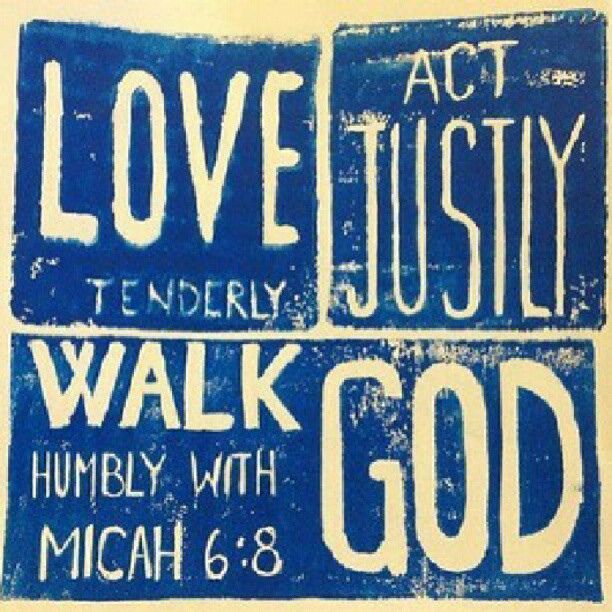
We know what God asks of us. To act justly, lovs tenderly, and walk humbly with our God. (Micah 6:8)

Love One Another… always

Tonight as we were waiting to learn if my country was going to act on the genocidal threats of our president, I volunteered outside Delaney Hall providing support to families detained by my country under the same president’s inhumane immigration policies.

Six men and one woman were released this afternoon. Everyone in the hospitality tent clapped when a husband and wife were reunited. We consoled a crying wife and mother who has lost hope that her husband will be released. We distributed diapers to moms and coaxed shy children into picking out a toy to take home. Other volunteers grilled hot dogs and handed out empanadas and donated food and grocery gift cards. Good people helping good people in dark times.

All in all a mixed up day in a crazy world in times I could not have imagined. Yet I am choosing to be on the side of goodness. I resist evil. I say NO to the cruelty done in our name.

We heard about the cease fire while we were still helping folks in the hospitality tent. And then some more folks came out after their visit and we provided emotional and practical support

When I came home I read this from Pope Leo: “”Today, as we all know, there was this threat against the entire ​people of Iran, and this is truly unacceptable … People want peace. I would invite the citizens ​of all the ​countries involved to ⁠contact the authorities — political leaders, congressmen — to ask them to work for peace.”

I have written my members of Congress.

Tomorrow is another day, a day to pray and act for peace through justice. I choose love. Always. Everywhere. This is the way. Love one another.

Christ calls us to peace

This Easter Tuesday

I cry

I cry out to the Risen Christ

He who calls us to peace

He who witnessed to peace through his own life, suffering, death, and resurrection

He who calls us to put away our swords

He who breaks open our hearts and calls us

To love. Always. Always to love.

Because God is love. We are made for love.

Risen Christ,

I cry out this day when my country’s leaders threaten unimaginable violence and destruction,

Choosing war over peace.

May we say no to war. Always.

“War is always a defeat for humanity.” -Pope John Paul II

“War… has always been rightly considered a calamity that clashes with God’s plan”. -Pope Benedict XVI

“War is the suicide of humanity because it kills the heart and kills love.” -Pope Francis

“Brothers and sisters, this is our God: Jesus, King of Peace, who rejects war, whom no one can use to justify war. He does not listen to the prayers of those who wage war, but rejects them, saying: ‘Even though you make many prayers, I will not listen: your hands are full of blood’ (Is 1:15). -Pope Leo

Christ our peace strengthen and inspire us to pray, speak, and work for peace.

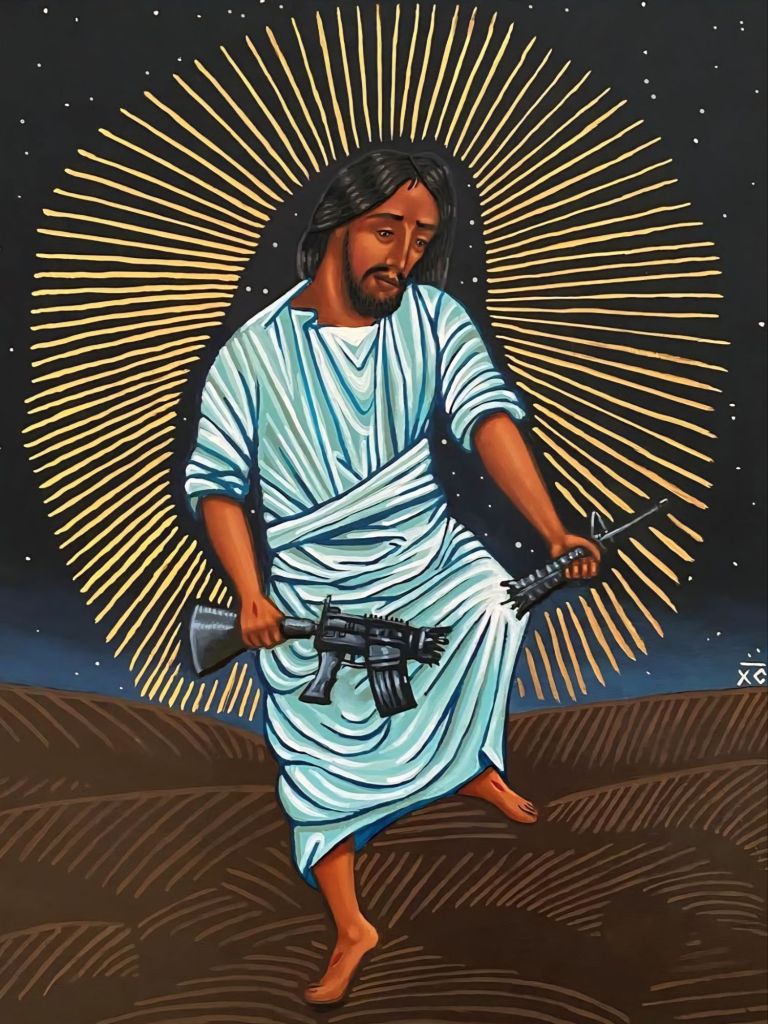
May we lay down our weapons and open our hearts as we follow you, the nonviolent one.

“The power with which Christ rose is entirely nonviolent.” -Pope Leo

Christ Breaks the Rifle by Kelly Latimore

Choosing Active Love over Indifference

True confession… Sunday’s Feast in the Catholoc tradition (Solemnity of Our Lord Jesus Christ, King of the Universe) is not my favorite. My relationship with Jesus is more as teacher, brother and friend than ruler. I resist the King and Lord imagery.

And yet when I reflect on this Sunday’s Gospel (Luke 25:35-43) what I experience is not the world’s image of a King. It is the crucifixion.  The paradox of the paschal mystery.

Jesus is on the cross, fully human in his suffering, being jeered by the rulers, guards, and onlookers. Yes the inscription on the cross names as a king but that is all. He is not treated as King of the Universe.

So why does the church have us reflect on this passage on this particular feast? What can we learn? We might recognize some of the attitudes of the world to the suffering of our day.

Reflecting on this passage, Pope Francis said:

“All these onlookers share a refrain that the text repeats three times: “If you are a king, then save yourself!” (cf. vv. 35, 37, 39). Save yourself! That is how they insult him; they challenge him! It is precisely the opposite of what Jesus is doing: he thinks not of saving himself, but of saving them. Yet those insulting words – “save yourself!” – are contagious; they spread from the leaders to the soldiers and then to the people; the ripple of evil reaches almost everyone there. Think about it: evil is contagious. Like an infectious disease, we catch it immediately. All those people talk about Jesus, but not for a second do they empathize with him. They stand apart and talk.

Such is the lethal infection of indifference. “This has nothing to do with me.” Indifference to Jesus, indifference to the sick, the poor, the destitute of the land.”

Evil and indifference are contagious. But so is goodness. And goodness can come from the most unexpected places.

I think we are meant to reflect on the man on the next cross, often referred to as the good thief. What can we learn from this, one of the last encounters of Jesus? Again, from Pope Francis:

“Yet there is another path: that of goodness. Amid all those onlookers, one person does get involved: the good thief. The others mock the Lord, but he turns to him and calls him by name: “Jesus”. That is all he asks of the Lord. A fine prayer that each of us can recite daily as a path to holiness. “Jesus, remember me!” Many jeer at Jesus, but he confesses his faults to Jesus. Many shout: “Save yourself!”, but he begs: “Jesus, remember me” (v. 42). In this way, a criminal becomes the first saint: he draws near to Jesus for an instant and the Lord keeps him at his side forever. The Gospel speaks of the good thief for our benefit: to invite us to overcome evil by refusing to remain as onlookers. Please, indifference is worse than evildoing.”

Indifference is worse than evildoing.

When he first walked out on the balcony of St. Peter’s, Pope Leo said:

“God loves us, God loves you all, and evil will not prevail!”

Evil will not prevail when we choose the way of Christ, when we resist the globalization of indifference, when we see the suffering Christ in our brother and sister and respond with love.

Let’s end this reflection with what Pope Leo said next that first day of his pontificate:

“All of us are in God’s hands.  So, let us move forward, without fear, together, hand in hand with God and with one another other!   We are followers of Christ.  Christ goes before us.  The world needs his light.  Humanity needs him as the bridge that can lead us to God and his love.  Help us, one and all, to build bridges through dialogue and encounter, joining together as one people, always at peace.”

May we bring the light and love of Christ into our world, through active listening and loving response.

A lesson from creation by Pope Leo

A reflection from Pope Leo on the readings for 18th Sunday of Ordinary Time:

“Ecclesiastes, invites us …  to come to terms with the experience of our limitations and the fleeting nature of all things that pass away (cf. Eccl 1:2; 2:21-23). On a similar note, the Responsorial Psalm presents us with the image of “the grass that is renewed… in the morning it flourishes and is renewed; in the evening it fades and withers” (Ps 90:5-6). These are two strong reminders which may be a bit shocking, but which should not frighten us as if they were “taboo” issues to be avoided. The fragility they speak of is, in fact, part of the marvel of creation.

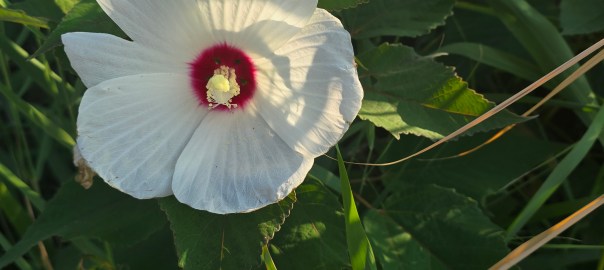
Think of the image of grass: is not a field of flowers beautiful? Of course, it is delicate, made up of small, vulnerable stems, prone to drying out, to being bent and broken. Yet at the same time these flowers are immediately replaced by others that sprout up after them, generously nourished and fertilized by the first ones as they decay on the ground. This is how the field survives: through constant regeneration. Even during the cold months of winter, when everything seems silent, its energy stirs beneath the ground, preparing to blossom into a thousand colors when spring comes.

We too, dear friends, are made this way, we are made for this. We are not made for a life where everything is taken for granted and static, but for an existence that is constantly renewed through gift of self in love. This is why we continually aspire to something “more” that no created reality can give us; we feel a deep and burning thirst that no drink in this world can satisfy.”