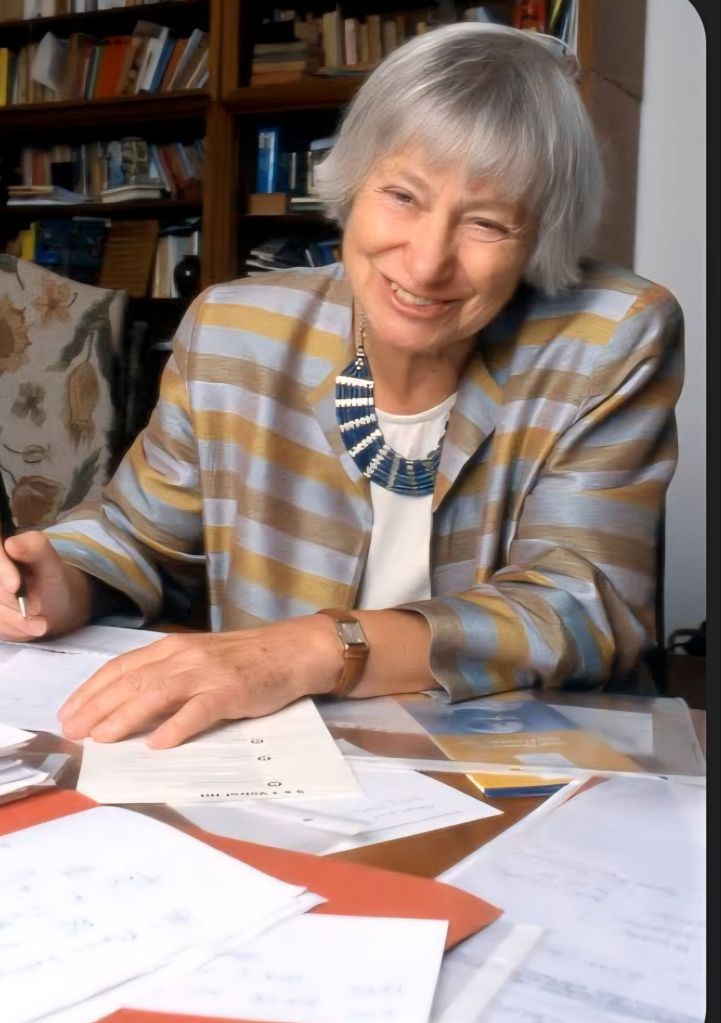
Today is the anniversary of the death of German theologian Dorothee Sölle (she died in 2003). We would do well to remember and learn from her as we face what it means to live in a context where death dealing policies take hold and are carried out in our name.
She wrote about what she called the mysticism of resistance. This theology was grounded in her own grappling with her context, given that she was fifteen years old when the second world war ended.
Sölle believed that today’s realities require us to “offer resistance actively and deliberately and in very diverse situations, against becoming habituated to death, something that is one of the spiritual foundations of the culture of the First World.” Consequently, she suggests that resistance is the “adequate form of struggle for those Christians” who are part of the dominant culture, such as “members of the white bourgeoisie—those who normally participate in the oppression and profit from exploitation.”
Such resistance is a is a “radical NO to the capitalist murder machine.” This “no” may take a variety of forms, such as “evasion, dissent, abstinence, refusal, boycott or strike, reform or counterproposal, dialogue or mediation.”
These acts of resistance, from within the dominant culture, require a “radically mystical consciousness” which maintains connection to “those who think otherwise … No one is excluded or eliminated.”
“Without this form of mysticism,” she writes, “resistance loses it focus and dies before our very eyes. It is not that creating public awareness, winning fellow participants, and changing how we accept things is beside the point. But the ultimate criterion for taking part in actions of resistance and solidarity cannot be success because that would mean to go on dancing to the tunes of the bosses of this world.”
Quotes from The Silent Cry: Mysticism and Resistance (Minneapolis, MN, Fortress Press 2001)