My immediate future involves another move, this time back to east coast groovy sister hq as I embark upon my new adventure as a member of our congregation leadership team starting in January. Truth be told, I’m a wee bit nervous but very excited about what lies ahead. Except for one small detail, that is, and that would be the actual process of moving.
Because, you see, as the title of this post implies, embarking on this new adventure means yet another chapter in the neverending story of my journey on the path to simplicity. Put quite simply … I STILL HAVE TOO MUCH STUFF.
Granted, I do have less than when I entered. For example, the picture is of a small sample of my many belongings which I sold at my parish rummage sale when I entered community after living alone in a two bedroom apartment for ten years. Since then I’ve moved across the country twice and to the middle of the country once (plus a short sojourn across the pond). I’ve also moved locally more than a few times. Each time, I embark upon what I like to call project “sort, purge, pack.”
If I am being generous and nice to myself, I can recognize and celebrate that I have decreased my belongings over time. But I am still a long way from embodying the simplicity I aspire to in my life. This always becomes clear to me, of course, when it’s time to pack!
And so, now that I’ve finished with my thesis and my comprehensive exams, and in between celebrating Christmas with my Dad, it’s time to sort through my belongings in my dorm room here at CTU and begin (again) the project of purging my pereptually expanding belongings and packing those which are essential (plus, I’m sure, some which are not). It’s a process and a journey after all!
Last night I attended an event at the Brother Darst Center in Chicago on supply chains. That in itself would be interesting, especially as it is so connected to my thesis topic, given that there is in fact so much forced labor in our supply chain that we are all connected to human trafficking just by the pervasive act of purchasing goods and services.
What made the evening extra special was that it was a special event co-hosted by the Chicago Justice Cafe.
The reason this is cool is that Justice Cafes are a program for young adults that I had a hand in creating when I was working at the Intercommunity Peace and Justice Center in Seattle. Essentially they are a network of young adults committed to a spirituality that does justice who get together monthly to learn and share about important issues. The IPJC office puts together a discussion guide, prayer, etc… so it is ready to go right out of the box.
We started out small about 5 years ago with about 10 Justice Cafes mostly in the Pacific Northwest, although pretty early on through God’s providence we also had groups in California, on the East Coast, and even in Kenya and Nigeria.
It has been amazing to see something I helped to start continue to grow and expand. So when I saw that there was an event being co-hosted by the local Justice Cafe, I knew I had to go!
As I get ready to leave Chicago for new adventures, it was a nice way to tap back into earlier adventures and realize you never know what kind of impact you can have.
Over the weekend I was praying with a group of my CSJP Sisters, which is always a heart-stretching and heart-warming experience. As it happens, the prayer sheet we were using had some weird sort of typo where the characters “g=” were accidentally inserted right before the word “faithful.” During the quiet reflection time, I couldn’t get the resulting formula out of my head or heart:
g=faithful
God equals faithful. God is faithful. So simple yet so very powerful. I almost feel like I should engrave that on something or post it on my wall. When life seems complicated or the path ahead unsure, remember, God is faithful.
Then I prayed with the readings for this Gaudete Sunday, and was stopped in my tracks by the second reading from Thessalonians:
Brothers and sisters:
Rejoice always. Pray without ceasing.
In all circumstances give thanks,
for this is the will of God for you in Christ Jesus.
Do not quench the Spirit.
Do not despise prophetic utterances.
Test everything; retain what is good.
Refrain from every kind of evil.
May the God of peace make you perfectly holy
and may you entirely, spirit, soul, and body,
be preserved blameless for the coming of our Lord Jesus Christ.
The one who calls you is faithful,
and he will also accomplish it.
The one who calls is faithful. The one who calls will accomplish it. It is not up to me. It is not about me or us. Authentic call is about responding to God’s faithful love.
This weekend, I have several friends who have responded to the one who calls in faith, trust and love in special and powerful ways. My friend Stephanie married her sweetheart Matt. My friend Graham was ordained as a deacon on the path to being ordained as a priest. Another friend was in Peru witnessing the final profession of one of her Sisters. And today, my friend Belinda professes her final yes as a Benedictine Sister.
My prayer for all of my friends who are responding to the one who is faithful with a big “YES,” and this includes myself and the four CSJP Sisters who are stepping into the circle of leadership with me in January as we begin our term of office on the congregation leadership team, is just what this reading says.
May we rejoice always
Praying and giving thanks without ceasing, no matter what
May we embrace God’s will in our lives and in the lives of those with whom we are called to journey.
Spirit of God, soak us with your goodness and surprises.
Open our ears to your prophetic word.
Guide us on the path of creative experimentation.
Lead us to goodness and light and everything which gives life.
God of peace, strengthen our spirit, soul and body so that we may be ready,
Ready to respond joyfully always to your faithful love.
Help us to trust that it is YOU who works through, in, and with us.
You have called, God of peace and love and joy.
Thank you. Thank you. Thank you.
Periodically on Fridays I will share some words of wisdom from the founder of the Sisters of St. Joseph of Peace. Known in religion as Mother Francis Clare, Margaret Anna Cusack was a prolific writer in her day. She wrote lives of the saints, spiritual works, histories, and social reform. I find great inspiration in her life’s word and work. For example, this simple desire which she articulated at some point in her life resonates with the simplest desire in my own heart as a Sister of St. Joseph of Peace.
My desire to live the life of a sister, to give my life to God, and to work for his poor – this seemed to me the only object worth existing for.
When I graduated from college (ahem … twenty years ago!) I spent a year living in Switzerland with my brother and his family while I tried to figure out what I wanted to do with my life.
When I arrived in July 1994 I met my niece Alison who had been born the previous December. I consider having spent that year with her and her big brothers one of the graced times of my life. There is nothing quite like seeing a little one learn something new every minute.
Kids grow up of course, and my little niece Alison somehow turns 21 today. Which makes me exactly twice her age!!
Happy Birthday niece of mine! You are the same age I was when I first met you. Can’t wait to see where the next 21 years take you!
She was a prolific writer in her time and used the power of the written word astutely to spread the Gospel, challenge unjust structures, and advocate for people who were poor. She wrote letters, letters to the editor, and many, many books. By 1870, more than 200,000 copies of her works (most published under the names M.F. Cusack or Mary Francis Cusack) had circulated throughout the world. Profits from the sale of her books were used for the Sisters’ work with the poor.
In one of her autobiographies, she tells the story of her audience with Pope Leo XIII, when she was seeking approval for our new congregation, the Sisters of St. Joseph of Peace.
“My audience was entirely private … Mgr. Macchi brought in the whole set of my books to his holiness, who looked at them, I think somewhat surprised at the number. Some of them were duplicated, having been translated into German, French, and Italian. … His holiness specially commended the plan of my new order, and encouraged me in every way to continue writing. He gave his blessing to all the sisters present and to come, and to all those who would contribute to my work.”
Our original 1884 Constitutions, written by Mother Francis Clare, described our mission as being “to promote the peace of the Church both by word and work. The very name Sisters of Peace will, it is hoped, inspire the desire of peace and a love for it.” Word and work. I love that!
I can’t help but think that if she lived in today’s era of social networking, Mother Francis Clare would be tweeting for peace, spreading the good news of the Gospel and be on the forefront of the new evangelization. When our new community Twitter account (@SistersofPeace) went live earlier this year , I imagined her smiling in heaven at this new endeavor by her daughters in the 21st Century.
Because most of her books are in the public domain with the passage of time, she actually has quite an internet presence herself. You can read many of her works for free online, from histories of Ireland to lives of the saints to social reform. One of my personal favorite’s is her 1874 work, Women’s Work in Modern Society. Another one which is quite appropriate for this liturgical season is her 1866 book, Meditations for Advent and Easter. I use that one quite a bit for prayer this time of year!
As someone who has been growing into her own identity as both a Catholic Sister and a writer, I find great inspiration in Mother Francis Clare. This month marks ten years that I’ve been blogging my journey into religious life and experience as a Sister of St. Joseph of Peace, first at Musings of a Discerning Woman and now here. It’s also why I jumped at the opportunity to be a regular columnist on the Global Sisters Report. I am very grateful for the gift of writing, and I feel called to share that gift in the hopes that my words can touch hearts and minds in service of the Gospel.
I firmly believe that the Holy Spirit can work through any medium, even the Internet! Actually, I first discovered my religious community online when I was discerning religious life. That’s also why I’ve decided to join a group of younger Catholic Sisters in live tweeting during episodes of Lifetime’s new “reality” show The Sisterhood: Becoming Nuns. It’s actually been a fun experience, offering some of my own experience and “#realnun facts” as I watch the show. (You can join the conversation at #TheSisterhood.)
A younger Catholic Sister friend alerted me today that the folks over at the Huffington Post have noticed our live tweeting of the show.
“Social media savvy sisters have been doggedly following — and even live-tweeting — the show. They’ve been paying close attention to any potential misrepresentations, while remaining excited that the topic of religious vocation is getting national attention.”
I appreciated that description, because I think it aptly describes the spirit we’ve tried to embody as we’ve been live tweeting the show. Again, the Holy Spirit can work with anything! Even reality TV and Twitter!
It’s a far cry from Mother Francis Clare’s in person discussion of her writings with Pope Leo XIII, often considered the founder of Catholic Social Teaching. But nonetheless, I feel it is important to be part of the discussion where people are.
And, ok, I’ll admit it …. it’s kind of cool that the Huffington Post article includes a screen shot of one of my live tweets from last week’s show!
screenshot of my one of my live tweet’s from last week’s episode highlighted in HuffPo article
In the end, I have to think that Mother Francis Clare would use the media of the day to communicate for mission. Would she be on twitter, blogging, and on instagram? I have to think the answer would be yes!
By the way, be sure to check twitter when #callthemidwife returns to PBS …. a group of us have been live tweeting that as well!
“A voice cries out: in the desert prepare the way of the LORD,” (Isaiah 40:30) … In the literal and figurative deserts of our world today, when does my voice cry out? When I see mouths parched by thirst or children hungry, am I moved to cry out and act for justice? Do I proclaim God’s love and witness to that love in action? What about closer to home? How am I present and a sign of hope to people living through the desert moments of their lives?
“Kindness and truth shall meet; justice and peace shall kiss.” (Psalm 85) … Is this true in my own heart? Is this how I witness to God’s transformative love in my life? Does the truth of the Incarnation manifest itself in my interactions with my brothers and sisters, both those I am related to by blood and those I am related to in the heart and mind of God?
” … what sort of persons ought you to be, conducting yourselves in holiness and devotion, waiting for and hastening the coming of the day of God … Therefore, beloved, since you await these things, be eager to be found without spot or blemish before him, at peace.” (2 Peter 3: 11,14) … We wait in joyful hope, but we live in the present moment. If God’s reign is to come, do I live as if I really believe that it begins with me, here, now? Do I live my life each day, do I develop healthy habits of the heart which are reflective of my hope in God’s reign of justice and peace for all?
“A voice of one crying out in the desert: ‘Prepare the way of the Lord, make straight his paths.'” (Mark 1: 2-3) …. In the end, the message it seems is that how we live matters. God can make straight lines out of crooked ways, as the saying goes, but so too can I, in my own life, relationships, habits, and commitments.
I’m not a scripture scholar, nor am I a practiced preacher. But when I pray with these readings this second Sunday of Advent, I find myself reflecting on the ways that God’s love is (or isn’t) reflected in my daily life. If how we live matters, how am I living? And as I prepare for the celebration of the remarkable reality of God being with us, what difference does that make in my life and in my heart? How am I preparing room and making way?
My latest column is published over at the Global Sisters Report. It’s my attempt to engage the pesky and sometimes polarizing question of distinctive religious dress (aka habits) in a helpful way.
I am blessed to have younger religious friends, women and men, on both sides and in the middle of the distinctive dress question. Some of my sister friends are in communities that wear a habit. Most of my sister friends are in communities like my own that transitioned to simple dress almost 50 years ago, before we were even born. And some belong to communities that wear a habit for prayer, liturgy and ministry, but dress simply the rest of the time. This seems to be an option mostly for male religious, although I know a few sisters in this category.
As younger post-Vatican II religious, we made a decision to enter communities that have already made communal decisions about this question. We go where we feel at home. But in my experience, we do not judge those who make a different choice. We do not deride our peers either for wearing an “anachronistic costume” or for being a “plain-clothes nun.” Those labels belong to other generations, or perhaps should belong to none. Our attitudes of respect and inclusion affirm the both/and nature of the question today. Left to our own devices, over time, I believe we can heal this polarized division and in turn help heal a rift in religious life and the church. We find our common ground in the habits of love we develop, which form us as religious and shape the witness of our very lives as ones who follow Jesus in a particular way.
I’m reviving a feature from my old blog, at least until I finish my present life as a graduate student in Catholic theological ethics. From time to time, I’ve been sharing a quote from a theologian which I think people might find interesting, challenging, or otherwise important. This particular quote is from a book which I highly recommend, especially in light of the most recent manifestations of what the U.S. Bishops named in 1979 as “an evil which endures in our society and in our Church” (Brothers & Sisters to Us) … racism.
The book is called Racial Justice and the Catholic Church(Orbis Books, 2010) by Bryan N. Massingale. Fr. Bryan Massingale is a highly respected Catholic moral theologian who has worked extensively both as an academic and as a practitioner on the issue of racial justice. I was lucky enough to take a very challenging course on the ethics of power and racial justice during my studies at Catholic Theological Union. Massingale’s 2010 book was one of our central texts for the course. It’s easy to read and yet nimbly engages the complex reality of racism, the challenge it poses for the church, and the promise of racial justice.
I found his book very challenging and incredibly important. I also found it empowering, especially his work on the need for a theology and practice of lament. Massingale astutely observes that racism engages us viscerally at the gut level. For this reason, we can’t merely rely on reason as we work for racial justice. The emotional responses on all sides to what’s been happening in Ferguson and across the country illustrate this key point. Our shared history and present reality is just too messy to logically “fix” the enduring and embedded reality of racism.
Because racism and racial injustice hit us in the gut, they tend to be “impervious” to appeals to reason. If we cannot think, reason, or debate our way through this impasse, what do we do?
Massingale believes that we need to “lament the ambiguity and distortions of our history and their tragically deforming effects on ourselves. We need to lament, mourn, and grieve our history. … Lament has the power to challenge the entrenched cultural beliefs that legitimate privilege. It engages a level of human consciousness deeper than logical reason. Lamenting can propel us to new levels of truth seeking and risk taking as we grieve our past history and strive to create an ethical discourse that is more reflective of the universality of our Catholic Faith.” (Bryan Massingale, “The Systemic Erasure,” in Catholic Theological Ethics, Past, Present, and Future: the Trento Conference, ed. James F. Keenan, Orbis Books, 2011).
I share his insights because they have been powerful for me, informing both my prayer and my action as a white woman who experiences white privilege every day that distances me from the entrenched reality of racial injustice which my brothers and sisters of color cannot escape. Massingale believes that not only the victims of racial injustice, but even the beneficiaries of privilege, can and should lament.
“For the beneficiaries of white privilege, lament involves the difficult task of acknowledging their individual and communal complicity in past and present racial injustices. It entails a hard acknowledgement that one has benefited from another’s burden and that one’s social advantages have been purchased at a high cost to others. Here lament takes the form of a forthright confession of human wrongdoing in the light of God’s mercy. It is a form of truth-telling and contrition that acknowledges both the harms that have been done to others and one’s personal and communal culpability for them.” (Racial Justice and the Catholic Church)
Until we recognize, lament, and mourn this unfortunately reality, we can never effectively counter the distorted denial of our God given equality or find our way to the path towards racial justice. Until we recognize, lament, and mourn this unfortunate reality, we continue to get caught up on rational discussions of bias and prejudice, from which it is easy to distance ourselves, and fail to see the embedded and structural nature of racial injustice from which we cannot escape.
So I had lots of plans for today. Lots and lots of plans to do lots of important things. But first I went for a long walk and had a little conversation with God, as I’m apt to do on long walks. That’s where the poem I posted earlier today came from. When I returned home and turned on my computer to start working on Chapter 6 of my thesis, instead I felt an overwhelming urge to make a video prayer reflection set to “Write Your Story” by Francesca Battistelli.
A little bit of background. I’d never heard this song or the artist (it’s not one of my regular musical genres) until this summer when I was planning a retreat for Catholic Sisters in their 40s with some friends from Giving Voice. My friend Rejane suggested this song for one of our prayer experiences during the retreat, where we were also going to invite folks to write a six word memoir (which is an excellent exercise by the way–try it!).
On the first listen, I wasn’t super excited about the song. But it got stuck in my head. And my heart. And so I listened to it … again, and again, and again. As it happens, about this time I was invited by my community to discern something pretty huge that seemed beyond anything I could imagine for me right now, but which at the same time seemed like maybe what God was in fact inviting me to next. At this point, it would probably help if you heard the song I’ve been praying with since July:
Listening to the song, I can’t help but be reminded of Jeremiah 29: 11: “For I know well the plans I have in mind for you, plans for your welfare and not for woe, so as to give you a future of hope.” (Of course, just a couple of chapters earlier Jeremiah realized he had been “duped”!)
Discernment is about listening to your heart. But discernment is also about listening to what God has written on your heart, and opening yourself up to what has not yet been written. It’s all well and good writing those words here, or even discerning something huge. Then comes actually stepping into the new chapter, taking a deep breath and learning to trust.
Apparently that was what I needed to do today, take a deep breath and sink into God’s love, because all day turned out to be an unplanned prayer day. Or, at least unplanned by me. The mischievous Holy Spirit may have had other plans. I trust that what needs to get done, my many plans for important things, will get done.
I mentioned the exercise we did on retreat where we invited folks to write their memoir in six words. Here’s mine: Nonstop brain. Opened Heart. Seeking Peace.
 My immediate future involves another move, this time back to east coast groovy sister hq as I embark upon my new adventure as a member of our congregation leadership team starting in January. Truth be told, I’m a wee bit nervous but very excited about what lies ahead. Except for one small detail, that is, and that would be the actual process of moving.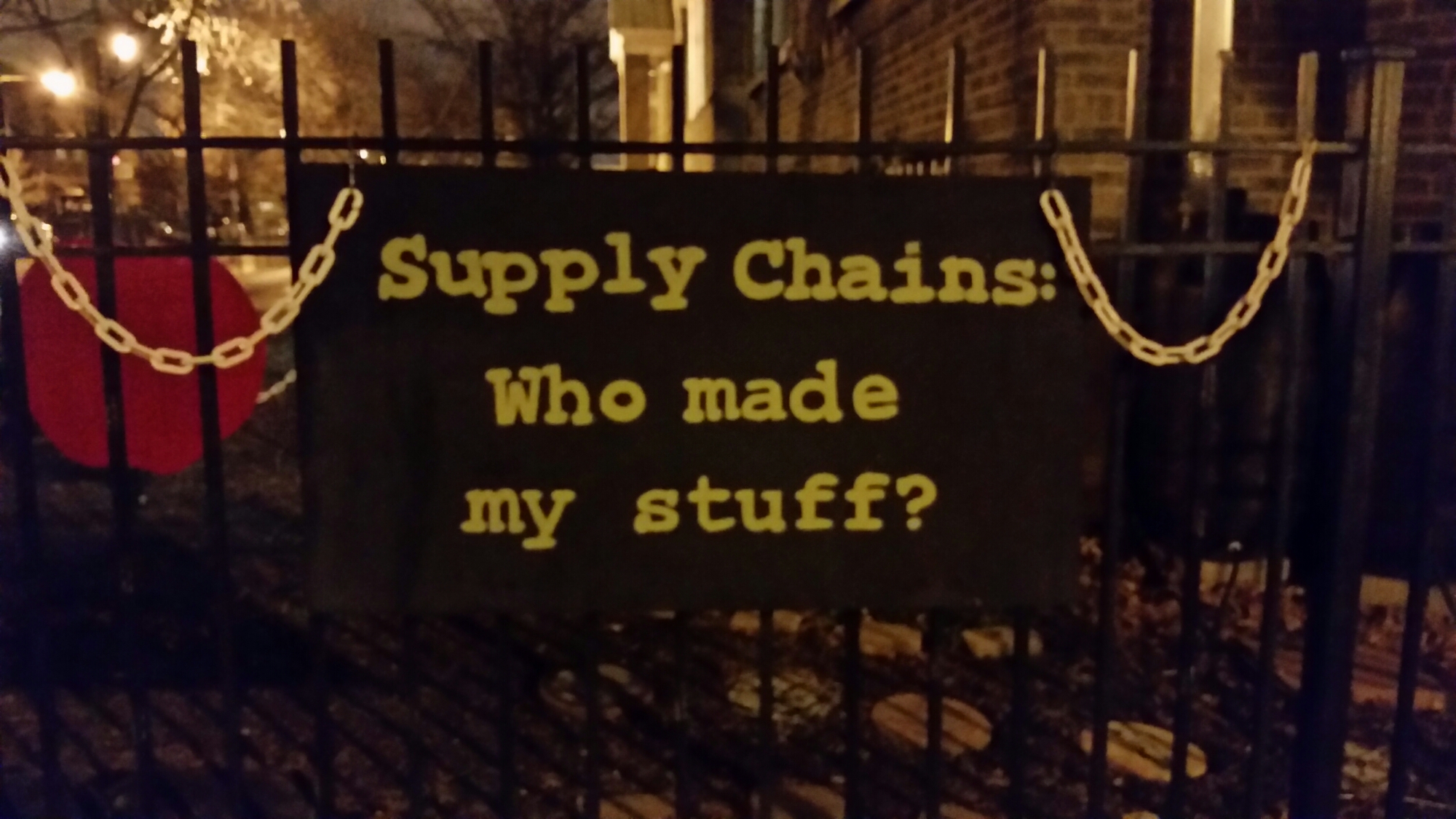


 At the Corner of Susan and St. Joseph